
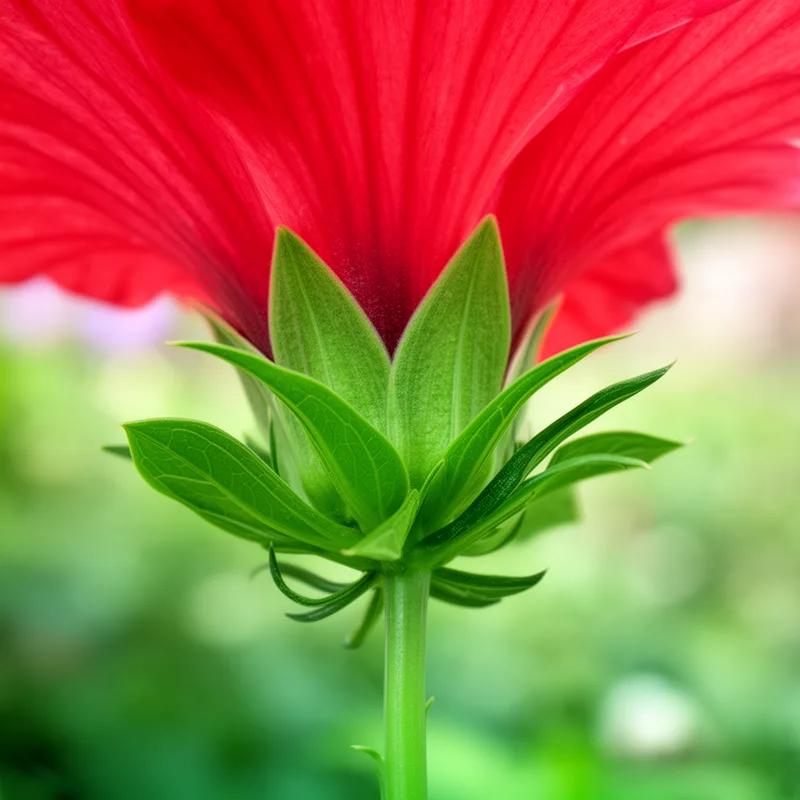
false calyx
- noun
- Specialized
- In carnations, the false calyx is formed by bracts that enclose the true calyx.
Examples
-
The hibiscus flower displays a distinctive false calyx beneath its petals.
-
Botanists can distinguish the false calyx from the actual calyx by examining the flower's structure.
-
The false calyx is beautiful.
-
Many flowers have a false calyx.
-
Botanists can distinguish the false calyx from the actual calyx by examining the flower's structure.
-
In carnations, the false calyx is formed by bracts that enclose the true calyx.
-
The hibiscus flower displays a distinctive false calyx beneath its petals.
Synonyms

A group of small leaf-like parts under the flower's outer cup

A group of small green leaf-like parts under a flower that protect it and look like a calyx
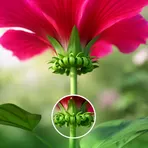
A ring of small leaflike parts outside the base of a flower, as in hibiscus or carnation
Surface Forms
Morphology
The adjective 'false' denotes imitation or not genuine, so when combined with 'calyx' it straightforwardly indicates a calyx-like structure that is not a true calyx (i.e., a group of bracts resembling a calyx). The 'false + noun' composition is a regular, cross-linguistic pattern (cf. pseudo-/faux- constructions), so a learner who knows both constituents can reliably infer the meaning.
Etymology
The noun false calyx names a group of leaf-like parts that looks like a real calyx but is false. These parts sit under the petals in some flowers, so the name came to mean 'a group of leaf-like parts that looks like a calyx'.

