
fallenness
- noun
- /ˈfɔːlənəs/
- Formal
- Augustine fully understood that if the human condition was a state of fallenness, then the greatest sin must be pride.
Examples
-
The heritage of Paul through Luther reminds us that law becomes the instrument through which our own fallenness assaults our conscience, attacking our very relation to God.
Academic text (1994) -
One classic example is Reinhold Niebuhr, whose influential book, The Children of Light and the Children of Darkness, defends constitutional democracy by using the proposition of the fallenness of man rather than inherent rights.
Academic text (1998) -
"We have been shaped by the fallen world, but we have also added to its fallenness.
Blog text (11) -
Think about how many people, and this is, you know, sort of a reflection on our, our fallenness and brokenness and our ontological condition.
-
One of the challenges raised is against the doctrine of human depravity or the "fallenness" of humankind.
Academic text (1997) -
We have already reflected upon the manner in which blues texts and blues praxis challenge the presuppositions of fallenness and transcendent justice, but it remains to briefly examine the celebration of the devil and hell in blues.
Academic text (1997) -
In this bill, the nation acknowledged its fallenness, its lack of racial innocence, and confronted the incriminating self-knowledge that it had rationalized for many years: a flagrant injustice.
Academic text (1990) -
To the extent that it provides a tradition of worldly wisdom designed to save us from the pitfalls of our common nature (to use Arendt's words), the necessity of government is not only a testimony to human fallenness but also a testimony to prudence.
Academic text (1993) -
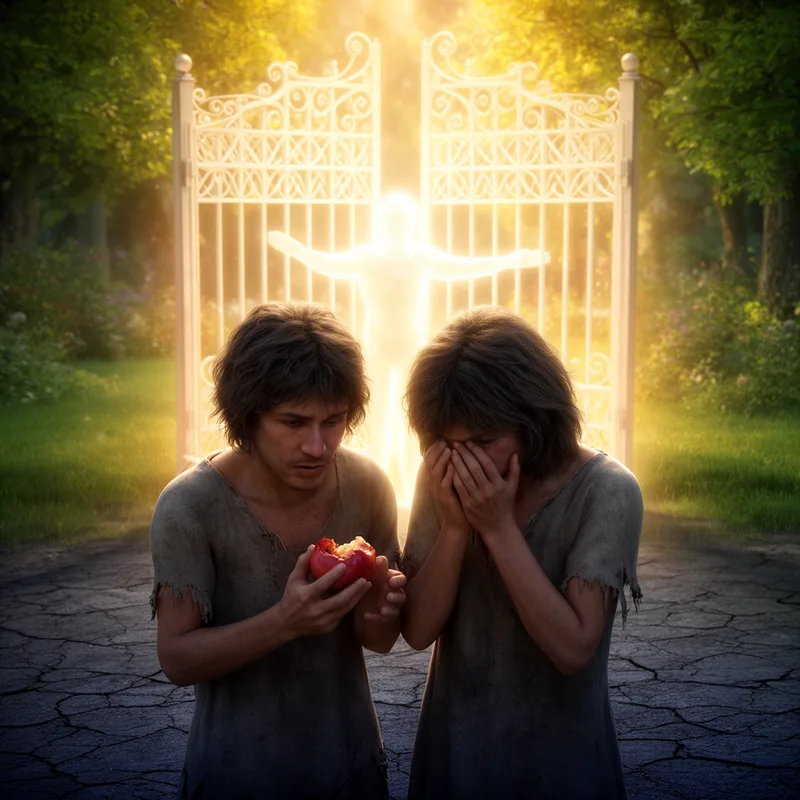
In Christian theology, the concept of fallenness refers to humanity's moral imperfection after the original sin.
-
The notion of fallenness emphasizes the separation from God that results from human wrongdoing.
Antonyms



Surface Forms
Morphology
Etymology
Fallenness comes from the simple verb fall, which means 'to move down', plus the ending -ness, which means 'state'. It is often tied to the Bible idea of 'the Fall', when humans 'fell' from God's grace, so fallenness means the state of moral imperfection and separation from God.