
fal la
- noun
- /fɑːl lɑː/
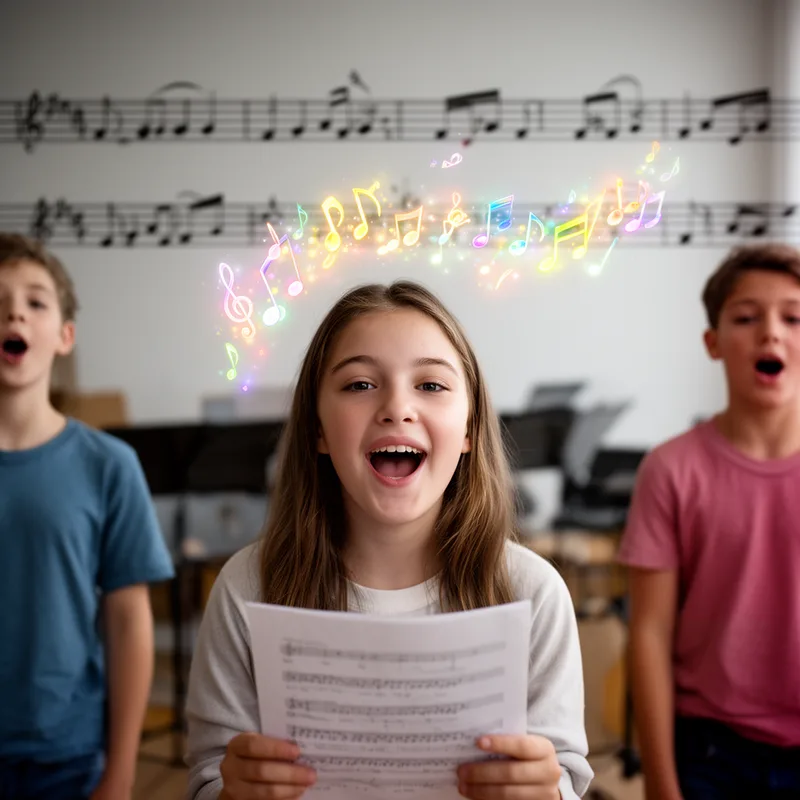
- The choir sang a cheerful tune with a recurring fal la in the chorus.
Examples
-
Many Renaissance songs feature a playful fal la between verses.
-
The children giggled as they improvised a fal la during their music class.
-
The choir sang a lively fal la during the performance.
-
In the song, they repeated the fal la refrain.
-
Many Renaissance songs feature a playful fal la between verses.
-
The choir sang a cheerful tune with a recurring fal la in the chorus.
-
The children giggled as they improvised a fal la during their music class.
Synonyms

 3
9.9
3
9.9

A short series of simple syllables sung as a refrain

Small nonsense sounds people sing or hum instead of words

A short cheerful sound that uses silly syllables
Surface Forms
Morphology
fal + la
The string is made of non-lexical vocables: 'fal' has no dictionary meaning and 'la' is known as a solfège syllable, so a B1 learner who only knows the constituents would not fully derive the conventional meaning 'a sequence of meaningless syllables used as a refrain'. However, similar refrain vocables (e.g. 'fa la la') are cross-linguistically common in songs, so learners may partly infer it as a musical nonsense refrain.
Etymology
Fal la comes from singers using simple syllables like fal and la as a short repeated part in songs. Because singers used these playful 'nonsense' sounds to fill the tune and join voices, fal la now means a cheerful line of meaningless syllables used as a 'refrain'.