
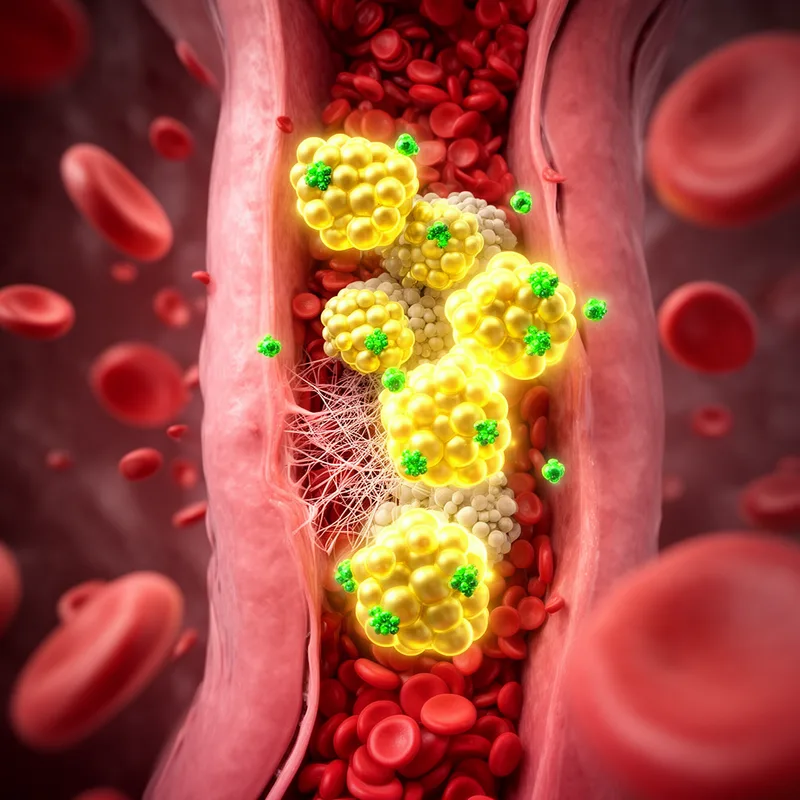
factor VII
- noun
- /ˈfæktər ˈsɛvən/
- Specialized
- Factor VII is essential for the blood clotting process, as it helps prevent excessive bleeding.
Examples
-
A deficiency in factor VII can lead to serious bleeding disorders, requiring medical intervention.
-
Researchers are studying how vitamin K influences the production of factor VII in the kidneys.
-
OCs induce increases in factor VII coagulant activity and in fibrinogen concentrations, and lower antithrombin concentrations.
Academic text (1999)
Synonyms
A protein made in the kidney that helps blood form clots

A protein the kidney makes that helps blood clot and needs vitamin K
A protein made in the liver with vitamin K that helps blood clot
Surface Forms
Morphology
Knowing 'factor' (an element) and 'VII' (seven) lets a learner infer this is the seventh factor — a numbered entity — so part of the meaning (a labeled/numbered factor) is recoverable. However, the specific biomedical sense (a blood-clotting protein produced under vitamin K, clinical relevance) is specialized domain knowledge and cannot be derived from the constituents alone, so full meaning is not predictable for a B1 learner.
Etymology
Factor VII is named like a set of numbered blood helpers: factor means a blood 'helper' and VII is the number seven, so it is the seventh helper that helps make a blood 'clot'. It is a protein made in the kidneys with the help of vitamin K, so less vitamin K or less factor VII can cause more 'bleeding'.

