
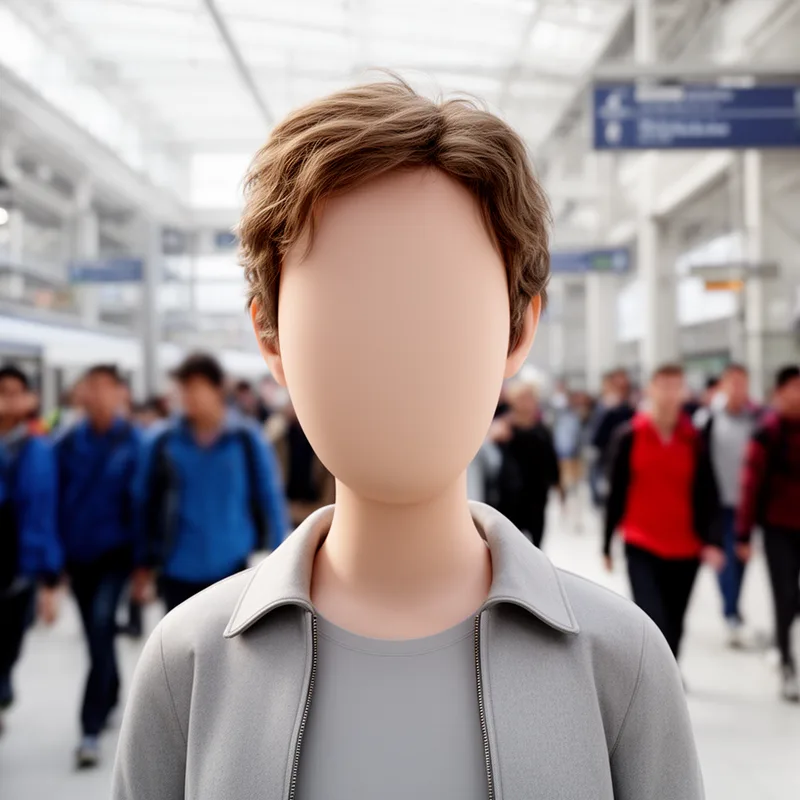
facelessness
- noun
- /ˈfeɪsləsnəs/
- Literature
- The facelessness of the crowd made it difficult to recognize anyone in the busy station.
Examples
-
Some modern sculptures use facelessness to represent the loss of personal identity.
-
The painting conveyed a sense of facelessness that made it eerie.
-
In the story, the villain's facelessness made him even more mysterious and frightening.
-
In the novel, the character's facelessness symbolizes their lost identity.
-
The painting captured the facelessness of modern society, highlighting how people often feel anonymous in large crowds.
-
His poetry often explores themes of facelessness, reflecting the struggle against losing one's identity in a conformist world.
-
In her artwork, the facelessness of the figures symbolizes their emotional detachment from society.
Synonyms

 4
4.3
4
4.3

A feeling of emptiness with no thoughts or emotion


 1
8.7
1
8.7
A lack of clear parts or details that stand out
 1
5.1
1
5.1
A plain, empty look with no decorations
Antonyms


Surface Forms
Morphology
Etymology
The word facelessness is made from face, -less, and -ness, where -less means 'without' and -ness makes a state or quality. So facelessness literally means 'without a face', an image that helps you remember the idea of a person or sculpture with no facial features.