
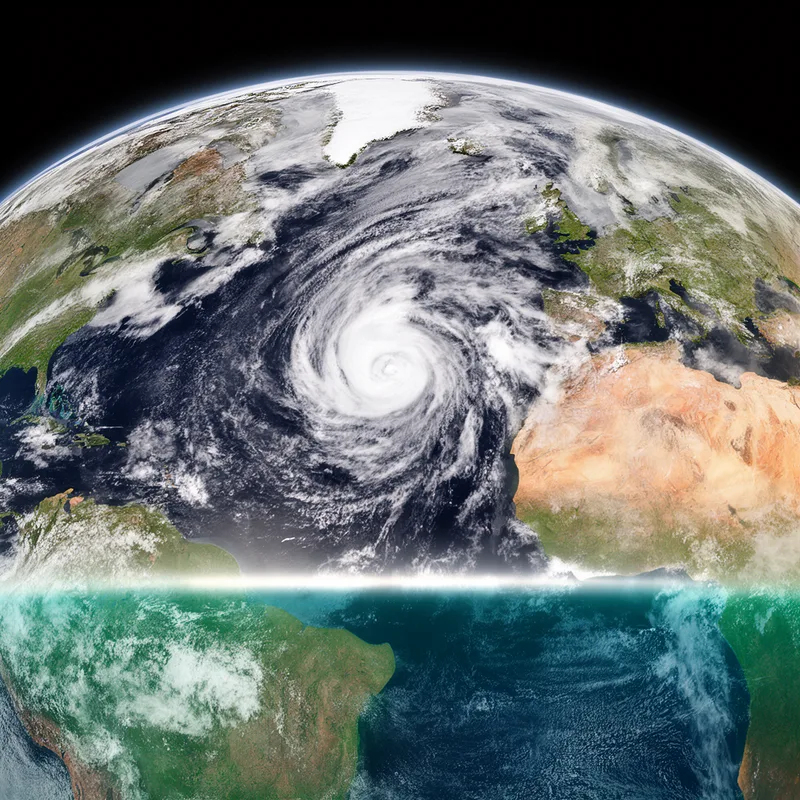
extratropical
 1
6.9

- adjective
- /ˌɛkstrəˈtrɒpɪkəl/
- Specialized
- Meteorologists classified the storm as extratropical because it formed outside the tropical regions.
- extratropical cyclones
- intense extratropical
Examples
-
Vigorous extratropical cyclones follow a strengthened subtropical jet stream into Southern California during some El Niño years.
Academic text (1994) -
When the system becomes extratropical, it allows for temperature advection, essentially the formation of warm and cold fronts.
Blog text (22) -
In contrast, an extratropical low is typically positioned at or near the intersection of a cold front and warm front.
Blog text (14) -
The storms appear to have been intense extratropical cyclones.
Academic text (1994) -
They were most likely intense extratropical cyclones that passed through southern or central California.
Academic text (1994) -
It's also possible for an extratropical cyclone to develop what's known as a warm seclusion.
Blog text (14) -
In an average year, one or more hurricanes will evolve into extratropical storms in a fairly straightforward manner as they move into the North Atlantic.
Blog text (14) -
Meteorologists called this storm extratropical because it did not originate in the tropics, as do most hurricanes.
Blog text (27) -
Hurricane Sandy’s transition into an extratropical cyclone is the other piece of the puzzle as to why it was so massive.
Blog text (22) -
The veering wind shift and the winter occurrence of the southeasters indicate that the storms were largely extratropical cyclones that approached the coast of Southern California from the northwest.
Academic text (1994)
Synonyms

 1
4.1
Not in the warm area near the equator
Surface Forms
Morphology
Etymology
Extratropical breaks down into extra- and tropical; extra- means 'outside' or 'beyond' and tropical comes from tropics, the warm area around the equator. So an extratropical storm is one that moves 'outside' the warm tropics into cooler areas away from the equator, which is why the word describes weather outside the tropical regions.