
extratemporal
- adjective
- /ˌɛkstrəˈtɛmpərəl/
- Specialized
- The extratemporal anatomy of the facial nerve is variable.
Examples
-
In cases of occult intratemporal, extratemporal, or skull base malignancies, however, patients can also present with acute facial paresis or paralysis resembling Bell's palsy.
Academic text (2002) -
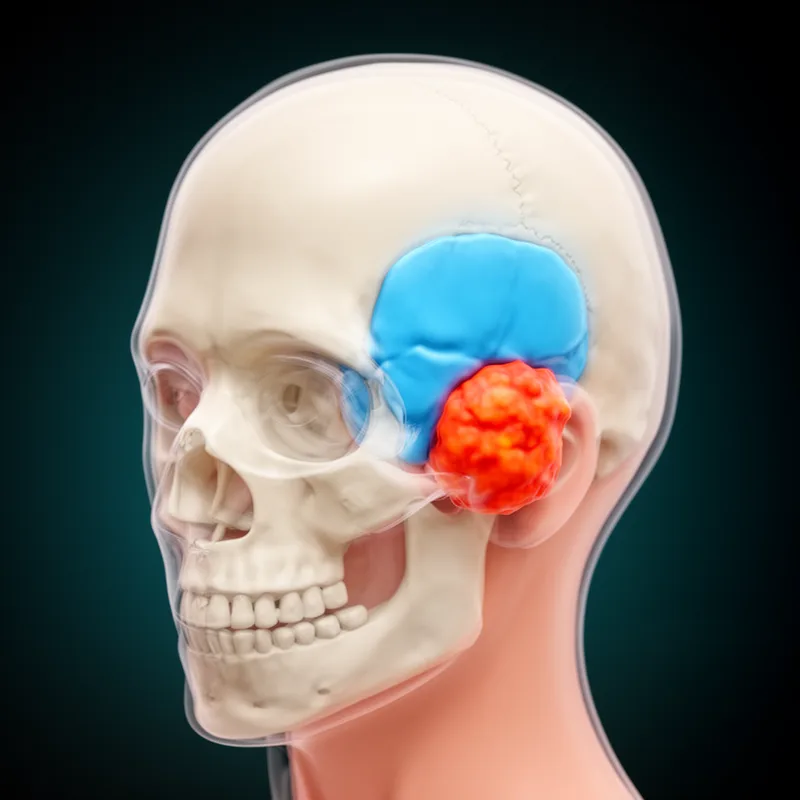
The extratemporal region of the skull is critical for certain nerve functions.
-
Although it remains the most common cause of facial nerve paralysis, various intracranial, intratemporal, extratemporal, skull base, or systemic diseases can also be responsible (Table 1).
Academic text (2002) -
Surgeons often analyze the extratemporal structures during facial procedures.
-
Her study focused on the extratemporal aspects of cranial anatomy.
Surface Forms
Morphology
Etymology
Extratemporal comes from extra- meaning 'outside' and temporal, which in medicine points to the 'temple' or the temporal bone at the side of the head. So in anatomy an extratemporal finding is one that is 'outside' the temporal bone or temple area.

