
extramusical
- adjective
- /ˌɛkstrəˈmjuːzɪkəl/
- Specialized
- Children and musically untrained adults alike respond with these extramusical analogies or focus on timbre, tempo, or dynamics when asked to describe music.
- extramusical goal
- extramusical factors
Examples
-
In the moment of performance, the improviser must assimilate and respond to a wide range of musical and extramusical factors.
Academic text (1993) -
Many composers incorporate extramusical references to enhance the emotional depth of their pieces.
-
The goals of a music program should include musical as well as extramusical dimensions.
Academic text (2007) -
Yet, many said that the goals of a music program should include musical as well as extramusical dimensions.
Academic text (2007) -
The dialogue features two experts discussing a student's progress on musical and extramusical goals.
Academic text (2006) -
Up to now, we have only occasionally experimented with extramusical elements during the musical portion of a performance.
Academic text (1999) -
The dialogue also demonstrates how a music lesson can simultaneously address students' musical and extramusical goals.
Academic text (2006) -
Its extramusical mission is to connect the listener to some plane of Jewish thought or identification.
Academic text (1990) -
Many examined extramusical information depicting the social, political, and cultural environments of the composers.
Academic text (2001) -
The objective of a music therapist's lesson is to achieve an extramusical goal that leads to improvement in a student's cognitive, physical, or social skills using music.
Academic text (2006)
How Musical


Surface Forms
Morphology
Etymology
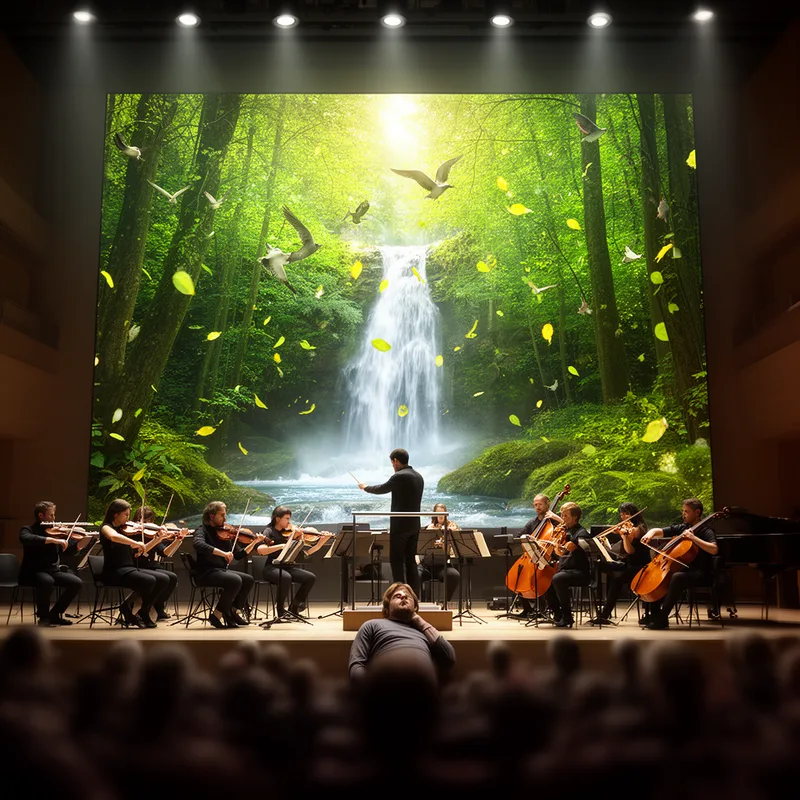
The word extramusical breaks into extra- meaning 'outside' or 'beyond' and music meaning 'music', so a helpful way to remember it is 'outside the music'. Extramusical describes ideas, images, or meanings that are not in the notes themselves but still change how we understand or feel the piece.