
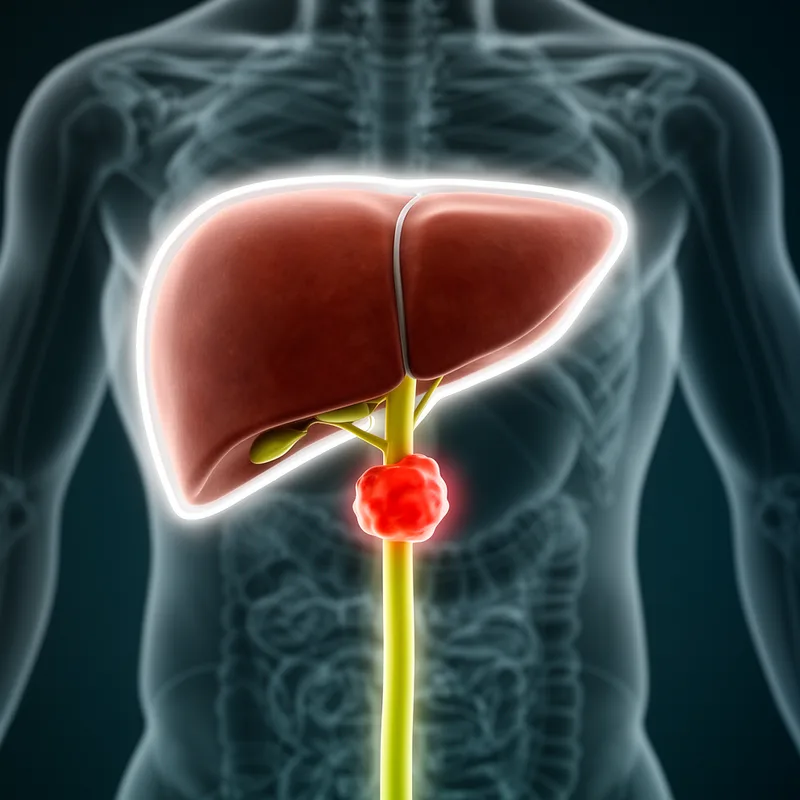
extrahepatic


 1
8.5
- adjective
- /ˌɛkstrəhɪˈpætɪk/
- Specialized
- The aetiology of cancer of the extrahepatic bile duct is unknown.
- extrahepatic bile duct
- extrahepatic bile
- extrahepatic bile duct cancer
Examples
-
We examined the incidence of extrahepatic bile duct cancer after cholecystectomy in a large population-based group with complete long-term follow-up.
Academic text (1994) -
Our findings show unequivocal and striking extrahepatic metabolism of cyclosporin. This metabolism almost certainly took place in the small intestine.
Academic text (1991) -
Cholecystectomy causes a markedly reduced risk of extrahepatic bile duct cancer starting around 10 years after the operation.
Academic text (1994) -
Theoretically, part of the observations could arise if the diagnosis of extrahepatic bile duct cancer was made earlier due to close medical attention.
Academic text (1994) -
The Alpha and Beta isoenzymes are present in adult liver, whereas the Gamma isoenzyme is widely distributed in extrahepatic tissues (including the brain).
Academic text (1991) -
As gallstones are formed in the gallbladder, the occurrence of extrahepatic bile duct cancer in patients after cholecystectomy is of interest.
Academic text (1994) -
Moreover, the female to male ratio (1.5:1) of extrahepatic bile duct cancer (n5) is similar to that of gallstones.
Academic text (1994) -
The highest incidence of extrahepatic bile duct cancer is reported among American Indians (n1), who also have a particularly high prevalence of gallstones.
Academic text (1994) -
There was agreement on cancer sites in reports filed by clinicians and pathologists for about 70% of the extrahepatic bile duct cancer cases reported to the Swedish Cancer Registry (Table 3).
Academic text (1994) -
The doctor explained that extrahepatic conditions can lead to complications in liver function.
How Internal
- Specialized
1
8.6

- Specialized
1
8.5
Surface Forms
Morphology
Etymology
Extrahepatic breaks into extra- meaning 'outside' and hepatic meaning 'liver', the same root you see in hepatitis. So, extrahepatic means located 'outside' the liver.