
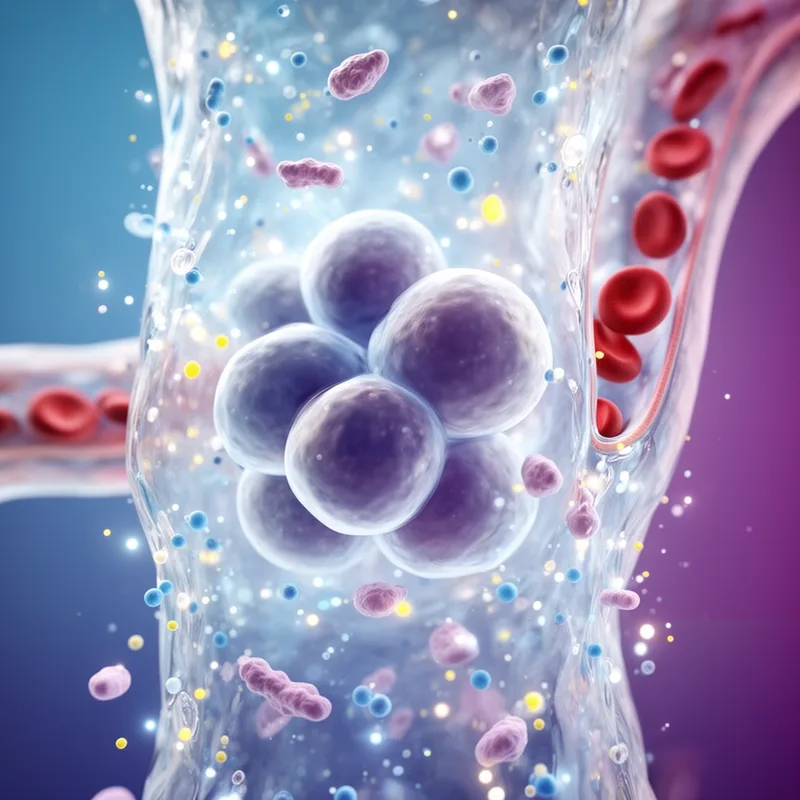
extracellular fluid
- noun
- /ˌɛkstrəˈsɛljʊlər fluːɪd/
- Specialized
- Changes in the composition of the extracellular fluid can affect cell function and hydration.
Examples
-
So we also collected A extracellular fluid using microdialysis during this wake and sleep transition.
-
In fact, the extracellular fluid is very rich in a particular ion, sodium, and has lesser amounts of other ions.
-
The hormone system is a very powerful mechanism for controlling extracellular fluid osmolality.
Academic text (1998) -
Extracellular fluid osmolality averages almost exactly 300 mOsm/liter.
Academic text (1998) -
And remember, the salt rich fluid is the extracellular fluid, the sodium chloride cation anion.
-
This conservation of water, accompanied by the loss of sodium and other osmotically active substances in the urine, corrects concentrated extracellular fluid.
Academic text (1998) -
And even more if one takes into account all extracellular fluids (10 liters, which would imply an average consumption of 490 g of corn and 5.8 kg in order to reach the maximum value in blood).
Blog text (14) -
The extracellular fluid surrounding the cells contains essential nutrients and waste products.
-
Maintaining proper levels of electrolytes in the extracellular fluid is vital for overall health.
Synonyms
 1
8.3
1
8.3

Liquid outside body cells that carries salts and proteins like blood plasma
Antonyms

- Specialized
The liquid inside a cell that contains dissolved substances the cell needs
Surface Forms
Morphology
The meaning 'body fluid situated outside cells' is directly and literally composed from 'extracellular' (located outside a cell) + 'fluid' (a flowing substance). This is a technical but transparent biomedical description and follows straightforward compositional logic found across languages, so a B1 learner who knows both constituents will be able to infer the meaning.
Etymology
The term extracellular fluid comes from its parts: extra meaning 'outside', cellular meaning 'cells', and fluid meaning 'liquid'. Think of cells as little houses and the extracellular fluid as the liquid in the streets and in the blood that carries salts and proteins, so the phrase means the liquid found 'outside' the body's cells.