
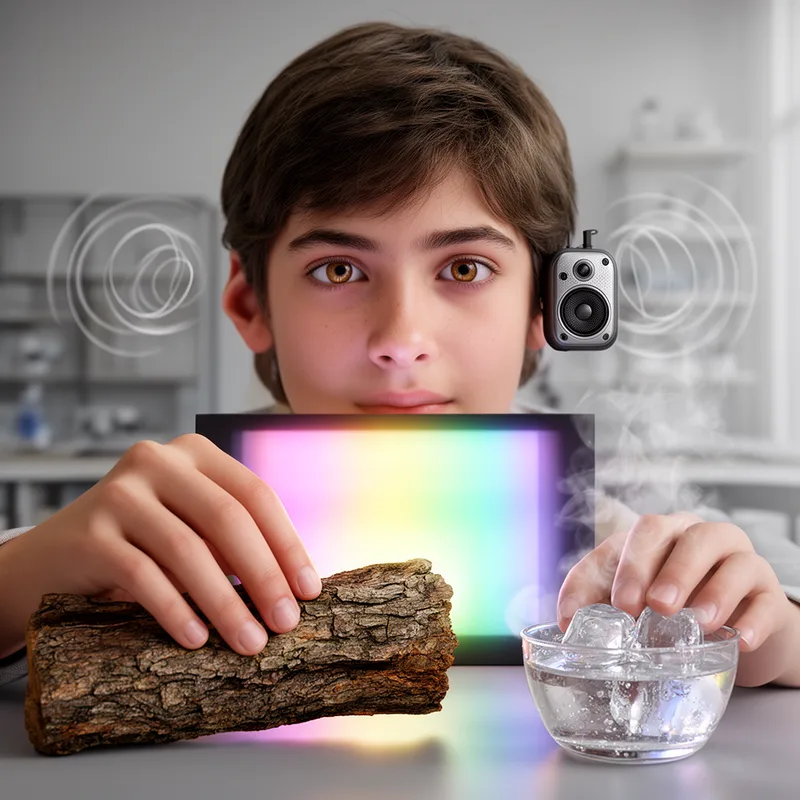
exteroceptive


 1
9.9
- adjective
- /ɛkˌstɛrəˈsɛptɪv/
- Specialized
- An artist's work often evokes exteroceptive responses, engaging viewers through visual stimuli.
Loading YouTube…
Watch on YouTubeAnd that is true regardless of whether or not one is focusing on interceptive perceptions within our body or exteroceptive perceptions.
- And that is true regardless of whether or not one is focusing on interceptive perceptions within our body or exteroceptive perceptions.
Examples
-
The brain is best considered in terms of its natural exteroceptive sensory interaction with the world, or the relationship between experience and behavior that Piaget explored, rather than in terms of hypothetical non-biological systems.
Academic text (1995) -
The present findings are consistent with the reports of others in which electrodermal responses were readily demonstrated in response to exteroceptive feedback of EDFs and the instruction to "think" emotional thoughts as compared to relaxing thoughts.
Academic text (1992) -
And that is true regardless of whether or not one is focusing on interceptive perceptions within our body or exteroceptive perceptions.
-
Humans rely on exteroceptive senses like sight and hearing to navigate their environment.
-
Animals use exteroceptive signals from their surroundings to find food and avoid danger.
Synonyms
 14
6.9
About noticing things with your eyes, ears, or other senses
Antonyms

Surface Forms
Morphology
exteroceptive = exteroception (semi-transparent) = extero + cept + ive
Formation from the noun 'exteroception' by adding the productive adjective suffix '-ive' is regular, but the base is a technical combining form unfamiliar to average learners.
Etymology
Exteroceptive breaks into extero- meaning 'outside', as in external, and -ceptive from a root meaning 'to take' or 'receive', as in receptive. So exteroceptive means 'taking in' information from outside your body, like sights, sounds, and touch.