

to expose
 479
3.2
479
3.2

- verb
- /ɪkˈspoʊz/
- But next accident would actually expose a new, new vulnerability.
- exposed to risk
- expose workers
- expose students
Loading YouTube…
Watch on YouTubeThat's where I first became exposed to sexual predators.
- That's where I first became exposed to sexual predators.
- Grassley in Congress have been exposed to and now contracted COVID.
- That's a long time to be exposed to that sort of work.
- Also, of course, he's exposed to two different critics.
- Your all of your assets are exposed to a claim.
- And yet most people I think will be exposed to pesticides.
- And I think that's one of our challenges, that we're not exposed to enough stories.
- Are you a painter and you're exposed to poison day in and day out?
- She can't be exposed to germs because of it.
- And now I realise it's because I was always exposed to lots of fiction books.
- And that exposed me to violence pretty early on.
- And sure enough, I start to get exposed to these other ways of making money, right?
Examples
-
Young children should not be exposed to harmful influences at a young age.
-
But how can I ask our parents to expose their kids to potential violence?
-
So now Jake has been exposed to COVID.
-
That area has been exposed to dozens of nuclear tests.
-
Let us expose its shortcomings.
-
Emergency department crowding causes two serious issues that expose patients to the potential for harm.
Academic text (2015) -
Consequently, high school physical educators should expose their high school students to a variety of lifetime activities.
Academic text (2015) -
We found that youths were chronically exposed to violent trauma in the local community.
Academic text (2013) -
The storm exposed the vulnerable houses to severe flooding.
-
The report outlined how the lack of safety measures can expose workers to dangerous conditions.
Synonyms
 124
3.7
124
3.7
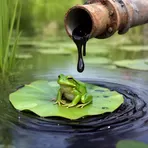
To put someone or something in danger of harm
Antonyms

Phrasal Verbs
 203
5.6
203
5.6
To put yourself in a situation to experience something new or difficult

How Exposed

Surface Forms
Morphology
expose = ex + pos
The meaning 'subject to danger or influence' is a semantic extension of the whole verb and is not guessable from the apparent surface pattern 'ex-' + 'pose'.
Etymology
Expose comes from the Latin parts ex- 'out' and ponere 'to place', the same root as position. So to expose someone to danger or influence is to 'place them out' where they are open or unprotected.