

expansionist
 1
6.8
1
6.8

- noun
- /ɪkˈspænʃənɪst/
- Some historians debate the role of expansionists in shaping the country's geopolitical landscape during the Cold War.
- postwar expansionist
Examples
-
The movement of expansionists in the early 1900s aimed to influence public policy towards acquiring new territories.
-
In both cases, the Austrians dealt blows to Slavic expansionist dreams—much as the Clinton administration, with its policies of Balkan occupation, cut Russia out of Europe.
Academic text (2000) -
Should we be worried about Putin being an expansionist or is he actually a nationalist?
-
Now facing an expansionist France under Napoleon, he learned too late that the Holy Roman Empire was not equipped to face a direct attack.
-
Japan had become expansionist, assembling a large military force.
-
Ex-Earth was a front for an American expansionist conspiracy that reached up into high levels of the administration.
Fiction book (1997) -
Therefore, European expansionists coveted the enormous spaces of Russia.
Academic text (1996) -
The expansionist move toward military conquest brings with it a series of cultural shifts, new conceptions of political dominance, and geographical configurations.
Academic text (1996) -
In contrast, in attempting to evade indigenous ownership and get more land more easily, expansionists were driving the political and cultural redefinition of indigenous people and their relationship to land.
Academic text (2008) -
Many politicians in the 19th century were expansionists, advocating for territorial growth as a means to increase national power.
Synonyms
 5
7.8
5
7.8
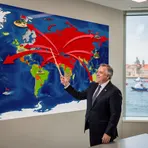
A person who supports a country taking control of other lands
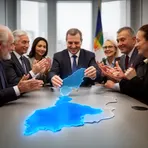
To support adding land to a country or state
Antonyms

How Expansionist

Surface Forms
Morphology
Etymology
Expansionist comes from the verb expand, 'to spread out', built from ex- 'out' and pandere 'to stretch'. An expansionist is a person or group who wants their country to get larger in land, power, or influence.