

exorcist
 3
9.9
3
9.9

- noun
- /ˈɛksɔˌsɪst/
- Archaic
- Trained by Vatican exorcist Gabriele Amorth, Father Jose Antonio Fortea is not only an exorcist, but also a writer, calligrapher, and parish priest.
Examples
-
I do notice that the exorcists in Acts 19 were Jews, not Christians.
Blog text (12) -
And by the time I was 27, I was an ordained exorcist.
-
He has been a practicing exorcist for several decades.
Blog text (24) -
According to the office and ritual of an exorcist, as written by the Roman Catholic Church, only Catholic priests can perform the ritual, and only if they have the permission of their local bishop.
Blog text (21) -
Father A is the officially sanctioned exorcist called upon by the New York Archdiocese.
-
Shortly, the exorcist, Father "A", will finalize the investigation before beginning the exorcism.
-
After ruling out medical causes, her mother turns to an exorcist—the sickly Father Merris.
Synonyms
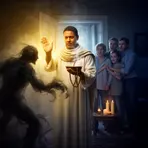
A person who uses ceremony and prayer to drive out evil spirits from people or places
Surface Forms
Morphology
exorcist = exorcise (semi-transparent) = exorcise + ist
Morphologically derived from 'exorcise' + '-ist', but this sense denotes a specific historical clerical office which is a specialized meaning.
Etymology
Exorcist once named a minor church officer whose job was to drive out evil spirits, and the word comes from Greek ex- 'out' (like exit) and horkos 'oath'. They used sworn words and simple rites to force spirits 'out', so the name fit that church duty even though the order is now no longer used in the Roman Catholic Church.