
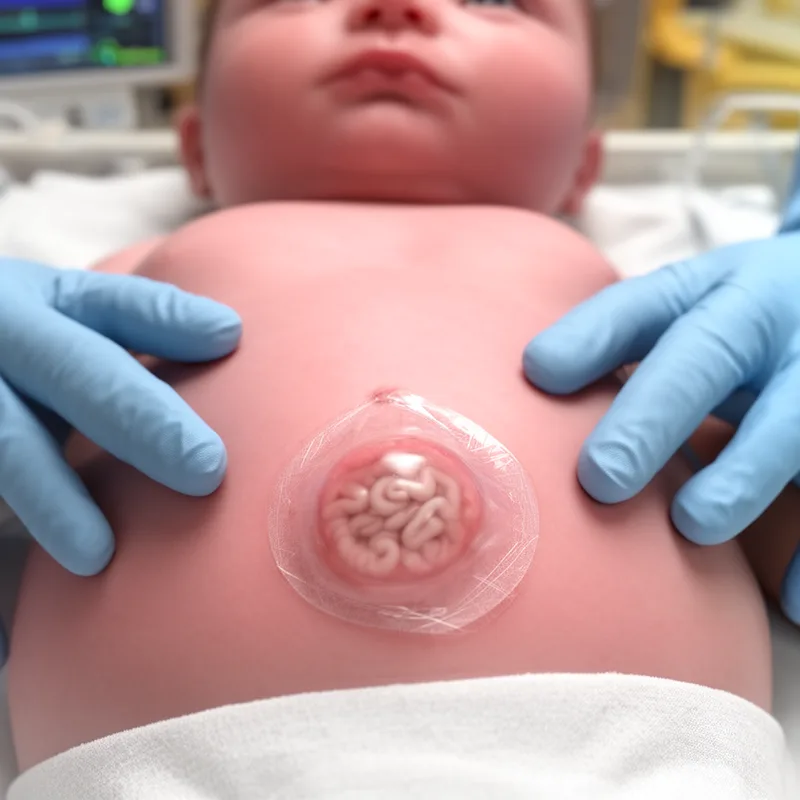
exomphalos
- noun
- /ˌɛk.sɒmˈfeɪ.ləs/
- Specialized
- The newborn was diagnosed with an exomphalos that required immediate surgical intervention.
Examples
-
Prenatal scans can often detect an exomphalos before birth.
-
Doctors explained that the baby's exomphalos would be managed in a neonatal intensive care unit.
-
The newborn was diagnosed with an exomphalos shortly after birth.
-
Doctors explained that an exomphalos occurs when organs protrude.
-
Doctors explained that the baby's exomphalos would be managed in a neonatal intensive care unit.
-
Prenatal scans can often detect an exomphalos before birth.
-
The newborn was diagnosed with an exomphalos that required immediate surgical intervention.
Synonyms



 1
6.5
A bulge near the belly button where part of the gut pushes through the stomach wall
 1
9.9
A birth defect where a baby's intestines stick out near the belly button

A bulge at the belly button that may be an early sign of a hernia
Surface Forms
Morphology
Etymology
The word exomphalos comes from the Greek parts exo- meaning 'outside' and omphalos meaning 'navel' or 'belly button'. So it means 'outside the navel', which explains why the word describes a condition where a baby's organs stick out at the belly button.