
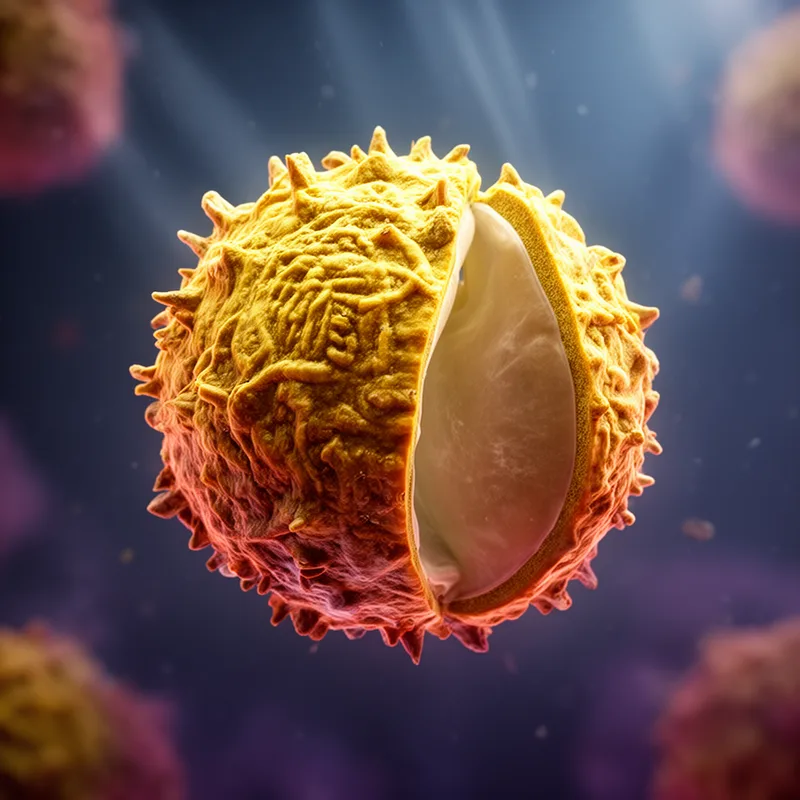
exine


 1
9.9
- noun
- /ˈɛksaɪn/
- Specialized
- The exine of most hydrophilous species is extremely reduced or lacking.
- exine of hydrophilous
- exine reduction
Examples
-
In species of Najas and the sea-grass Amphibolis, the exine is lacking altogether (see references in Philbrick and Osborn 1994).
Academic text (1996) -
An impressive convergence involves changes in the exine and the manner of pollen dispersal.
Academic text (1996) -
For terrestrial flowers, the exine also functions as a reservoir of substances involved in genetic self-incompatibility.
Academic text (1996) -
Kress (1986) suggested that the exine is an endpoint of selection on pollen-stigma interactions rather than on factors that operate during pollen transfer.
Academic text (1996) -
Because such substances may be labile or rapidly leached out in water, selection for exine retention in water-pollinated plants may be minimal (Les 1988a).
Academic text (1996) -
The exine provides a protective barrier for the pollen grain against environmental stressors.
-
Researchers studied how the exine influences pollen grain viability during fertilization.
-
The detailed structure of the exine helps in the classification of different plant species.
Surface Forms
Etymology
Exine starts with the prefix ex- which means 'out', and the word was made in scientific English to name the tough outer 'skin' of a pollen grain. So, exine is the outside layer that protects pollen and helps explain its role today.