
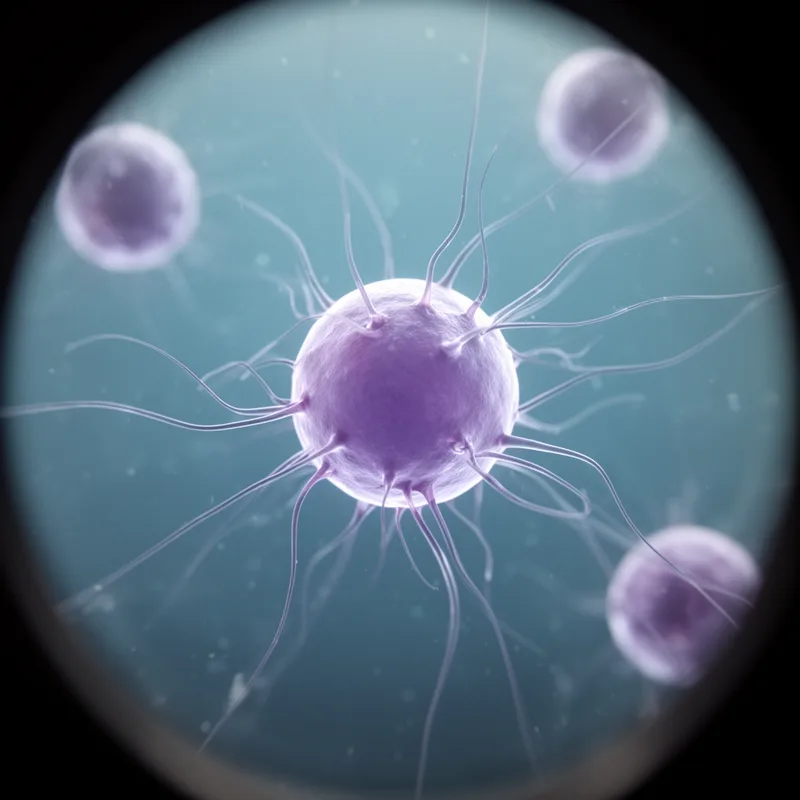
exflagellation


 1
9.9
- noun
- /ˌɛksflædʒəˈleɪʃən/
- Specialized
- During the life cycle of certain protozoa, exflagellation occurs when male gametocytes release flagella to facilitate movement.
Examples
-
Microscopic observation revealed the moment of exflagellation in the laboratory sample.
-
During exflagellation, the protozoan cell releases thread-like flagella into its environment.
-
The biologist studied exflagellation in malaria parasites to understand their reproduction.
-
The exflagellation of the protozoa is crucial for their reproduction.
-
During exflagellation, the cells release their flagella.
-
The process of exflagellation is critical for the reproduction of some protozoan species, enabling them to swim towards female gametes.
-
Researchers observed that the exflagellation of male gametocytes significantly increases their ability to fertilize female gametes.
Surface Forms
Morphology
exflagellation = exflagellate (semi-transparent) = ex + flagell + ation
Formed regularly from the verb 'exflagellate' + '-ation', but the verb and root are technical biological terms and may be unfamiliar or confused with 'flagellation' (whipping).
Etymology
The word exflagellation comes from ex- 'out' and flagellum 'whip'. So think of a cell pushing its tiny whip-like tails out, which is why exflagellation means the release of thread-like flagella from a cell.