
exclosure


 1
8.9
1
8.9
- noun
- /ɪkˈs kloʊ ʒər/
- Specialized
- A second line of research is using exclosure plots to measure the impacts of elephant populations on vegetation.
- predator exclosure
Examples
-
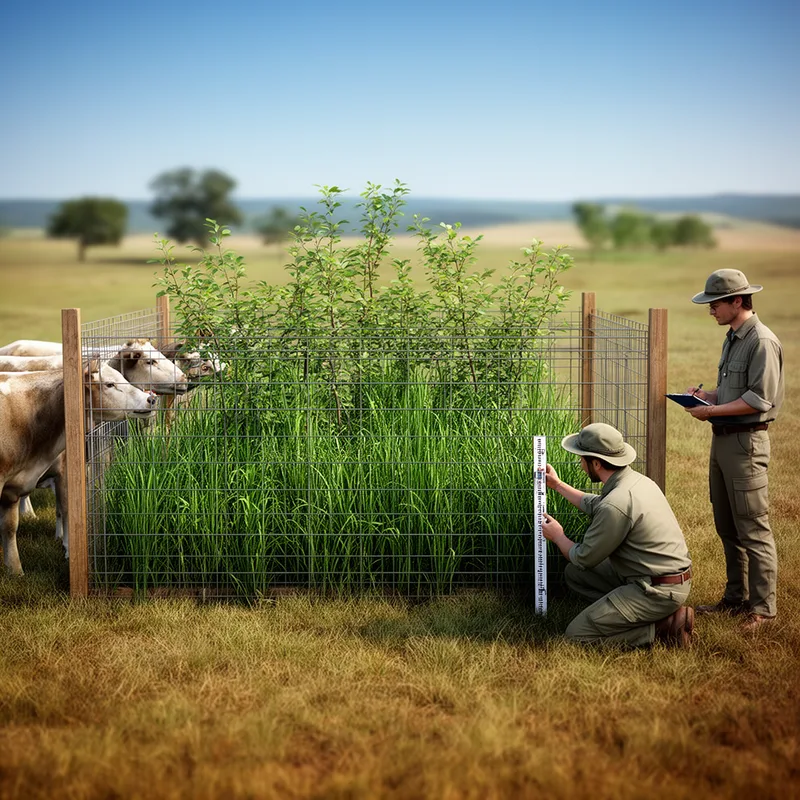
The researchers built an exclosure to observe how plants grew without animal interference.
-
Rogers said most exclosures cover a few branches of one tree, and, in rare cases, an entire tree.
Blog text (8) -
"Grazing caused a moderate change in the mix of plant species, but total plant production was equal inside and outside of the exclosures," says Sims.
Academic text (2005) -
Rogers said the results were a surprise because they were several times more than would have been predicted from simply scaling up the numbers from small-scale exclosure studies.
Blog text (8) -
Historically, if ecologists wanted to study how insects reacted to the absence of birds, they would build an "exclosure," a covering designed to keep birds out of their study area.
Blog text (8) -
In future work, she plans to conduct exclosure experiments on neighboring islands that still have forest birds and compare those results with observations on Guam to determine the exact links between the lost forest birds and the spider population increases.
Blog text (8) -
Radio-collared adult lemmings inside the predator exclosure showed much higher survival than those exposed to predators in control areas (data from Reid et al. 1995).
Academic text (1996) -
The 3- to 6-acre fenced-off plots—"exclosures," as Gillen calls them—are one of SPER's more significant features.
Academic text (2005) -
In the wildlife reserve, an exclosure was established to protect young trees from being eaten by deer.
-
The conservation team monitored an exclosure to assess the recovery of native plant species.
Synonyms
 25
3.5
25
3.5
An area surrounded by a fence, wall, or natural feature
How Enclosed

Surface Forms
Morphology
Etymology
Exclosure comes from the prefix ex- meaning 'out' and closure (from close) meaning 'to shut'. So, an exclosure is a piece of land that is 'shut out' from animals — a fenced area used to protect plants or to study how they grow without grazing.