
excitor
9.9
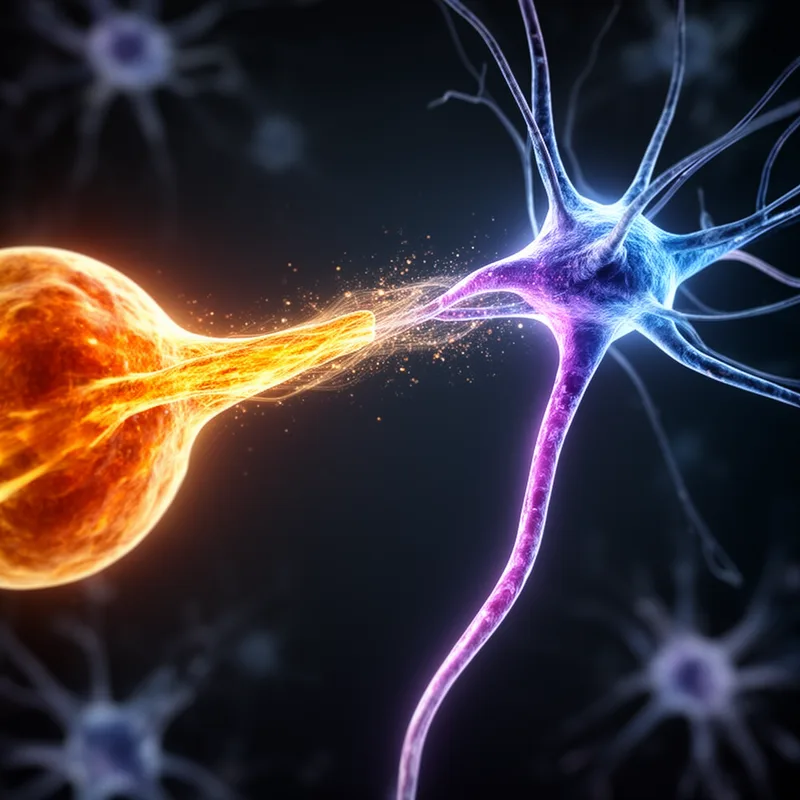
A nerve cell or structure that makes another nerve cell more active by sending a signal
- noun
- /ɪkˈsaɪtər/
- Specialized
:
excitor
- The spinal excitor transmitted signals that caused the muscle fibers to contract suddenly.
Examples
-
Damage to an excitor in the brain can disrupt normal communication between nerve cells.
-
An excitor can enhance the signal in a synapse.
-
Researchers studied how each excitor affected the overall activity of the neural network.
-
The excitor plays a crucial role in neural communication.
-
The spinal excitor transmitted signals that caused the muscle fibers to contract suddenly.
-
Damage to an excitor in the brain can disrupt normal communication between nerve cells.
-
An excitor can enhance the signal in a synapse.
Surface Forms
Morphology
Etymology
Excitor comes from Latin parts ex- 'out' and citare 'to call into action', the same root as excite. So in biology an excitor is a nerve or part that 'calls' another cell into action or 'wakes it up', making it more active.

