
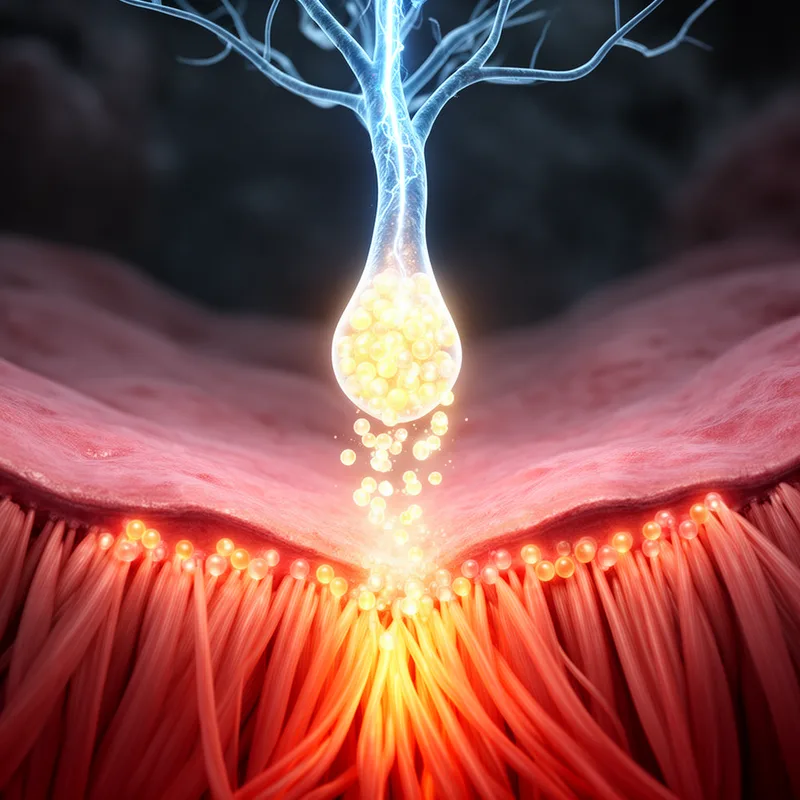
excitatory
 1
8.2
1
8.2

- adjective
- /ɪkˈsaɪtəˌtɔri/
- Specialized
- The primary aspect of this model is the combination of excitatory and inhibitory processes that function in unison.
- excitatory neurons
- excitatory neurotransmitter
- excitatory activity
Examples
-
Generally, the strength of motivation is linked to the amount of activity in excitatory centers in the hypothalamus.
Academic text (1998) -
OK, now why are some synapses excitatory, others inhibitory?
-
All that GABA does is snuff out an excitatory signal coming down here.
-
Glutamate is the principal excitatory neurotransmitter in the brain and spinal cord.
Academic text (2000) -
Activity in ALM excitatory neurons is therefore sufficient both to produce licking behavior and to cause widespread cortical activity.
Academic text (2016) -
The chief neurotransmitter in the vestibular nuclei is believed to be the excitatory amino acid glutamate.
Academic text (2005) -
We think that early maturation of these excitatory synapses disrupts the timing of later developmental milestones.
Blog text (20) -
Others have suggested that each motoneuron pool is actually supplied by both excitatory and inhibitory nociceptive interneurons (57).
Academic text (1997) -
To this end, we simultaneously optogenetically activated excitatory neurons in ALM of naive mice while imaging the rest of the cortex (Figures S6A and S6B).
Academic text (2016) -
Glutamate is known as the principal excitatory neurotransmitter in the brain.
Synonyms
 1
6.9
1
6.9
Causing cells, organs, or the body to become more active

Cause increased activity or alertness in the body

Making the mind or body more active
Antonyms

How Stimulating

Surface Forms
Morphology
Etymology
Excitatory comes from excite, which itself comes from old parts ex- meaning 'out' and citare meaning 'to move' or 'to rouse'. So, an excitatory signal or substance is one that 'moves' cells into action or makes them more active.