
eumelanin


 1
8.6
- noun
- /juːˈmɛləˌnɪn/
- Specialized
- Redheads with fair skin have mutations that disrupt the MC1R pathway, producing more pheomelanin than eumelanin.
Examples
-
Like humans with dark skin, control mice with black coats had an intact MC1R gene and produced much more eumelanin than pheomelanin.
Blog text (18) -
In addition to affecting coloring, eumelanin acts as an antioxidant.
Blog text (16) -
In dark-skinned individuals with dark hair, MC1R activity leads to the production of large amounts of eumelanin, compared to relatively small amounts of pheomelanin.
Blog text (18) -
The relative abundance of two pigments (pheomelanin and eumelanin) determines hair and skin color.
Blog text (18) -
A second strain of mice, with a mutated MC1R gene, had reddish coats and a much higher pheomelanin to eumelanin ratio.
Blog text (18) -
This gene directs redheads' bodies to produce more of the red-gold pigment pheomelanin and less of the dark pigment eumelanin.
Blog text (16) -
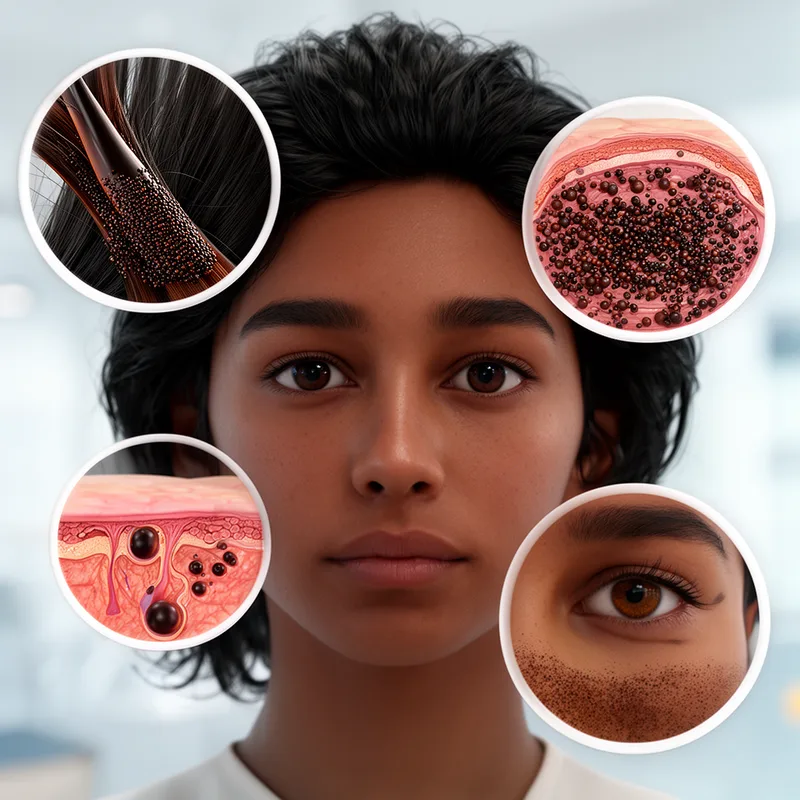
The pigment eumelanin is responsible for the dark brown color of my hair.
-
The scientist explained that eumelanin plays a crucial role in determining skin tone.
-
In mammals, eumelanin is responsible for the dark pigmentation in both fur and skin.
Surface Forms
Morphology
Etymology
Eumelanin comes from the Greek parts eu- meaning 'true' and melanin from melas meaning 'black'. So, eumelanin is the 'true black' pigment that gives hair, skin, and eyes their dark brown or black color.