
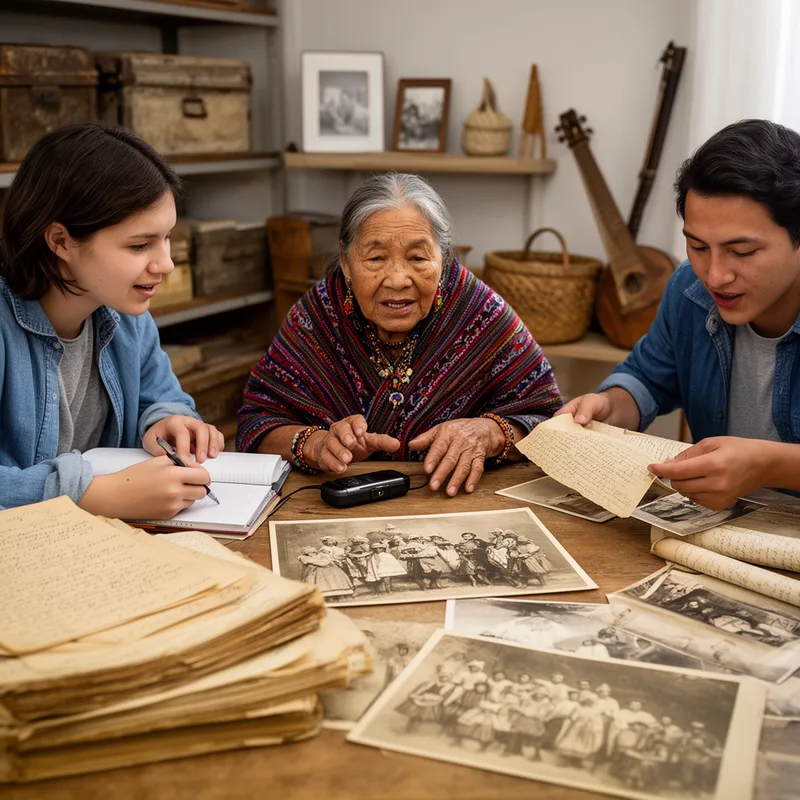
ethnohistoric


 1
9.2
- adjective
- /ˌɛθnoʊˈhɪstərɪk/
- Specialized
- Researchers use ethnohistoric methods to analyze the interactions between Indigenous peoples and colonizers throughout history.
- ethnohistoric and ethnographic
Examples
-
The ethnohistoric approach combines historical records and current practices to better understand ancient cultures.
-
Four phases of interaction between the Cuna and European peoples can be discerned through ethnohistoric documentation.
Academic text (1991) -
Scholars of social identity support these criteria with ethnographic, ethnohistoric, and, to a lesser extent, archaeological data.
Academic text (2000) -
This information may be available through knowledgeable individuals within a community or in the centuries' worth of ethnographic and ethnohistoric data available for various parts of North America.
Academic text (2005) -
Sandos, James A. Christianization Among the Chumash: An Ethnohistoric Perspective. 15(1):65-89.
Academic text (1992) -
Although ethnographic or ethnohistoric records are seldom pristine, complete, representative, or without bias, many archaeologists seem far more comfortable with them than with talking with living people.
Academic text (2005) -
Bringing this knowledge to the foreground and acknowledging ethnohistoric data as central for including Indigenous views in interpretations are both aspects of a decolonizing archaeology practice.
Academic text (2005) -
My argument is based upon the analysis of ethnohistoric information on Cuna society and its interaction with Scots, French, British, and Spanish who were present in Darien during the late seventeenth and early eighteenth centuries.
Academic text (1991) -
Without the participation of Indian people in our meetings, without ethnohistoric and ethnographic narratives of native religion and mythologies, and well-documented legends and languages, we'd be making up stories that fit our own preconceptions much better than they fit the data.
Academic text (2002) -
The ethnohistoric study revealed how traditional rituals evolved by integrating aspects of both Indigenous and European practices.
Synonyms
About the study of a people's history and culture using old records and traditions
Surface Forms
Morphology
Etymology
The word ethnohistoric comes from ethno- meaning 'people', the same root as ethnic, and historic from 'history'. So, ethnohistoric describes studying people's cultures by using both written history and close study of living people.