
ethnoflora
- noun
- /ˌɛθnoʊˈflɔːrə/
- Specialized
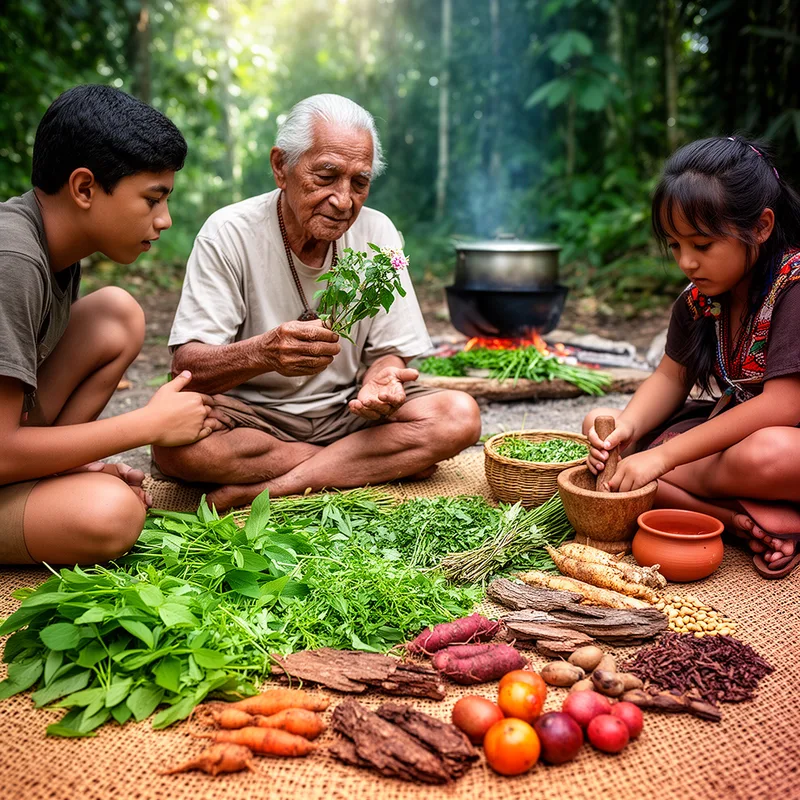
- The herbalist shared knowledge about the ethnoflora of the indigenous people, including the plants they traditionally cultivated for medicine.
Examples
-
Religious leaders retained elements of their ethnoflora by importing Old World species and by using accidentally introduced weeds.
Academic text (1990) -
Ultimately, by incorporating Old and New World species into their ethnoflora, practitioners of the faith retained a measure of their religious power in the emerging Afro-Brazilian community.
Academic text (1990) -
Widely dispersed now, akoko is counted among the ethnoflora of most Bahian terreiros.
Academic text (1990) -
By participating in preliminary initiation rites for one of the terreiros, I was able to observe plant-use ceremonies as well as to overcome some reluctance exhibited by practitioners to discuss their ethnoflora.
Academic text (1990) -
During the festival, we learned about the ethnoflora of the region, which included unique plants used in local rituals and cooking.
-
She studied the ethnoflora of her ancestors to better understand their cultural practices surrounding traditional plant use.
Surface Forms
Morphology
Etymology
Ethnoflora joins ethno- meaning 'people', the same root as ethnic, and flora meaning 'plants', as in 'flora and fauna'. So ethnoflora refers to the plants a particular group of people use and the knowledge they have about them.

