

ethmoid bone
- noun
- /ˈɛθmɔɪd boʊn/
- Specialized
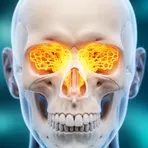
- In human anatomy, the ethmoid bone helps form the eye sockets, which protect the eyes.
- ethmoid bone and the vomer
Examples
-
The ethmoid bone is located between the eyes and contributes to the structure of the nasal cavity.
-
The infection spreads rapidly to adjacent sinuses and the orbit and continues into the cranium via the ethmoid bone or orbital vessels.
Academic text (2004) -
The contributions of the ethmoid bone and the vomer to the total bone surface area were inversely proportional; specimens with the largest ethmoid bones had the smallest vomers, and vice versa.
Academic text (2009) -
The contributions of the ethmoid bone and the vomer to the total bone surface area were inversely proportional; specimens with the largest ethmoid bones had the smallest vomers, and vice versa.
Academic text (2009) -
During the surgery, the doctor carefully examined the ethmoid bone to ensure no damage was done to surrounding structures.
Synonyms


 1
9.9
1
9.9
A light bone between the eyes that helps form the nose and eye sockets
Surface Forms
Morphology
The phrase is fully compositional: 'ethmoid' names a specific bone associated with the nasal/nasal cavity region and 'bone' is the head noun, so a learner who knows both constituents can infer it refers to that particular skull bone. This follows a common noun-noun naming pattern in anatomy and is therefore immediately understandable given knowledge of the parts.
Etymology
Ethmoid bone gets its name from the Greek word 'ethmos', meaning 'sieve'. The ethmoid is a very light, spongy bone full of tiny holes, so the 'sieve' image helps explain why it forms the part between the eyes and the nose.