
eth


 1
9.2
- noun
- /ɛθ/
- Specialized
- In the summer of 1953, Pauli gave a course at the ETH in Zurich on relativity—his first love.
Examples
-
Wthrich joined ETH in 1969, five years after he had earned a PhD in inorganic chemistry from the University of Basel in Switzerland, and began working on NMR.
Academic text (2002) -
Nine of the top 10 tech-focused universities improved their positions, led by MIT, Imperial College (6), Caltech (10), and ETH Zurich (13).
Blog text (20) -
From ETH in Zurich, this interesting essay on the last glacial period has some interesting points to ponder.
Blog text (15) -
He also studied at the Swiss Federal Institute of Technology (ETH) in Zurich.
Academic text (2001) -
Data were supplied by 139 respondents to a job advertisement published by the Chair for the Social and Natural Environmental Science Interface of ETH Zurich.
Academic text (1997) -
After five years at Varian Associates in Palo Alto, California, he started an academic career at ETH Zurich.
Blog text (19) -
Prof. Richard R. Ernst was educated as a physical chemist at ETH Zurich and finished his studies with a PhD in Chemistry in 1962.
Blog text (19) -
ETH's Richard Ernst, with whom Wthrich collaborated from 1977 to 1986, earned the 1991 Nobel Prize in Chemistry for his role in developing NMR methods (see PHYSICS TODAY, December).
Academic text (2002) -
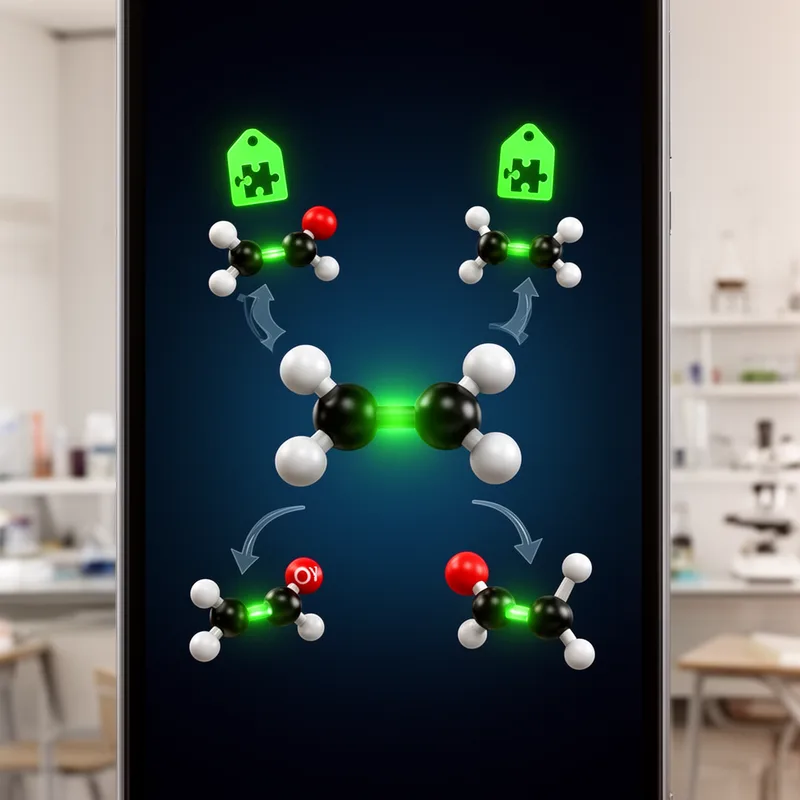
The prefix eth in the word ethanol indicates that it contains a two-carbon group.
-
In organic chemistry, the term eth is used to describe compounds like ethane and ethanol.
Surface Forms
Etymology
Eth in chemistry comes from the older name ethyl, first used for ether-like liquids. It became the short form for a 'two carbon atoms' group, so in ethane and ethanol eth tells you the molecule has two carbon atoms.