

eschatological
 3
9.9
3
9.9

- adjective
- /ˌɛs.kə.təˈlɑ.dʒɪ.kəl/
- Formal
- Finally, many of his poems deal with eschatological concerns, death, and ultimate things.
- eschatological anxiety
- eschatological vision
- eschatological speculation
Examples
-
Personal death replaced the first-century expectation of the apocalypse as the catalyst of eschatological anxiety.
Academic text (2008) -
Many religions share an eschatological outlook, discussing the end of the world and what lies beyond.
-
Each of them, at times, has rather traditional things to say about eschatological punishment.
Academic text (1993) -
The danger of eschatological thinking is the danger of eschatological results.
Academic text (1995) -
There is something deeply eschatological about the forgiveness of sin.
Academic text (2015) -
The founding gift of the Spirit opened up the church's eschatological future in a way that the resurrection by itself did not.
Academic text (2008) -
And yet, the ascetical lifetime also offered a means of negotiating this eschatological anxiety.
Academic text (2008) -
One is his macrohistorical, indeed eschatological, vision of the transition from feudalism to capitalism.
Academic text (1992) -
Evangelical responses to the crisis of everyday life can be explained in part by evangelicals' eschatological vision.
Academic text (1996) -
Put simply, Bernldez's history takes on an identifiable narrativity and is linked to a final sense of eschatological closure.
Academic text (2002)
Synonyms
 61
8.6
61
8.6
Relating to great damage and chaos like the end of the world
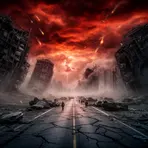
Describing a future with great destruction and the end of the world
Surface Forms
Morphology
eschatological = eschatology (semi-transparent) = eschat + ology + ical
The adjective is regularly formed from the technical noun 'eschatology' with -ical, but the base word itself is specialized and not widely familiar to average learners.
Etymology
Eschatological comes from the Greek root eschatos meaning 'last' and the ending -logy, as in biology, meaning 'study'. So it describes ideas about the 'last' things, like the end of the world or the final destiny of people.