

erythromycin
 2
4.1

- noun
- /ˌɛrɪθˈroʊmaɪsɪn/
- Specialized
- The patient was admitted to the hospital and started on intravenous erythromycin.
- resistant to erythromycin
- erythromycin and penicillin
Examples
-
The protocol permitted the standard treatment of children with whooping cough at each study site—i.e., erythromycin, salbutamol, or other supportive therapy.
Academic text (1992) -
Tetracyclines are contraindicated in pregnancy, and erythromycin is a suitable alternative.
Academic text (2015) -
Of other treatments that could influence the clinical course of the disease, erythromycin therapy was given to 87% (41/47) of the children.
Academic text (1992) -
A total of 73 (19.7%) S. pneumoniae isolates in the bacteriology population at screening were resistant to erythromycin (erythromycin MICs: 1 g/ml).
Academic text (2006) -
The doctor prescribed erythromycin to treat the bacterial infection.
-
Due to her penicillin allergy, she was given erythromycin instead.
-
Before surgery, the patient received erythromycin to prevent infection.
Synonyms


 1
7.5
A medicine that fights infections caused by bacteria
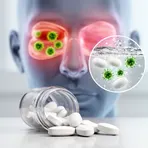
A medicine that kills bacteria and treats infections like a sinus infection

A brand name for an antibiotic that treats infections caused by bacteria

A brand name medicine that kills bacteria to treat infections

An antibiotic medicine that treats infections caused by bacteria
Surface Forms
Morphology
erythromycin = erythro + mycin (opaque) = erythro + mycin
The term is formed from specialized medical combining forms that are not recognizable or productive for average learners.
Etymology
Erythromycin comes from Greek parts: erythro- meaning 'red' and -mycin from mykes meaning 'fungus'. It was first found in a red microbe, and since -mycin is a common ending for antibiotics, erythromycin is the antibiotic whose name means 'red fungus'.