
erythroid


 1
9.9
- adjective
- /ɪˈrɪθrɔɪd/
- Specialized
- Of note, genetic manipulation of lincRNA-EPS expression did not alter erythroid differentiation, which suggests that its biological activities may be limited to influencing the apoptotic pathway.
- erythroid cells
- erythroid progenitors
- erythroid progenitor cell line
Examples
-
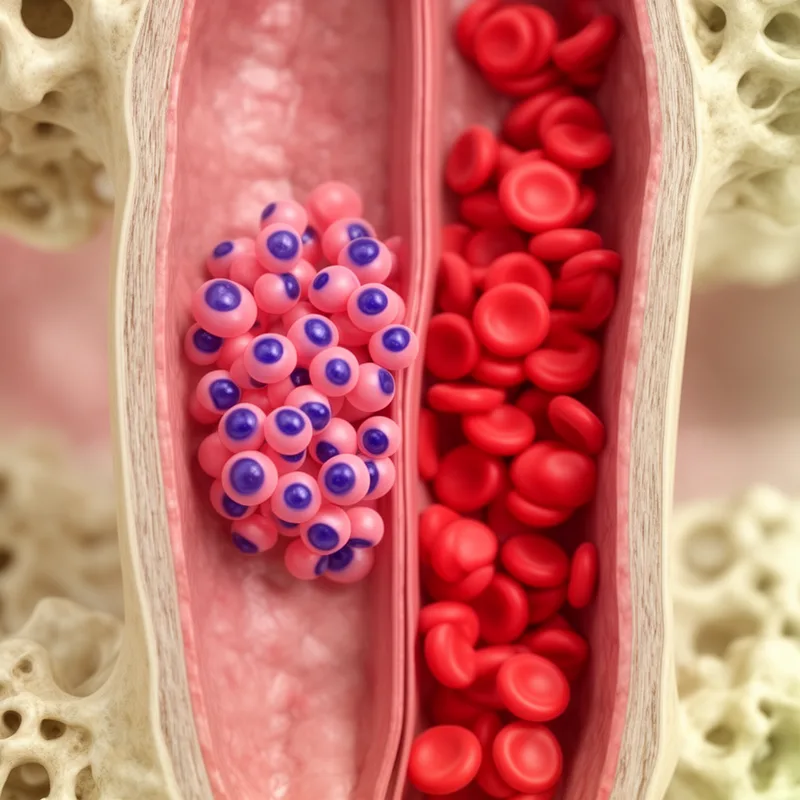
The study focused on the maturation of erythroid precursors in the bone marrow.
-
The transition from PSCs to erythroid progenitor cell lines is associated with extensive chromatin remodeling that ensures activation of erythroid-specific genes.
Academic text (2013) -
So here's an example region which is active in HSCS and erythroid cells but not in B cells.
-
Genetic manipulation of erythroid progenitor cell lines provides the possibility of developing on-and-off strategies.
Academic text (2013) -
It will therefore be interesting to investigate this new facet of erythroid development and to extend the scope of known IncRNA actions.
Academic text (2013) -
IFN- promotes anemia related to a decreased number of active erythroid progenitors; the presence of anti-inflammatory cytokines results in increased erythroid apoptosis.
Academic text (2007) -
IFN- promotes anemia related to a decreased number of active erythroid progenitors; the presence of anti-inflammatory cytokines results in increased erythroid apoptosis.
Academic text (2007) -
It is therefore conceivable that nuclear condensation and enucleation of erythroid cells generated in the presence of glucocorticoids might be improved by adding histone deacetylase activators in phase 3 cultures.
Academic text (2013) -
Erythroid cells are essential for carrying oxygen in the bloodstream.
-
Doctors examine erythroid levels to diagnose various blood disorders.
Surface Forms
Morphology
erythroid = erythro (opaque) = erythro + oid
The combining form 'erythro' and the suffix '-oid' are both specialized and not transparent to general learners.
Etymology
The word erythroid comes from the Greek root erythro- meaning 'red' and the ending -oid meaning 'like', as in humanoid. So erythroid means 'red-like' and is used for cells that are related to red blood cells.