
equalization
- noun
- /ˌiːkwəlaɪˈzeɪʃən/
- Specialized
- We now consider the post-2T stage, which begins after the equalization of the electron (T.sub.e) and ion (T.sub.i) temperatures. The point is that the 2T stage is short, and heat propagation in it is supersonic.
Examples
-
Let's so now with the equalization in demonstrate the effect of boosting or attenuating the low and high frequencies.
-
Equalization involves trade-offs among ideal readback waveforms, noise, and defect performance.
Academic text (1996) -
Since these channels need DC response, the noise prior to equalization is the same as that from the preamp.
Academic text (1996) -
The shape of equalization for PWM depends on which detection method is chosen.
Academic text (1996) -
Optical drives use equalization in an attempt to restore waveform quality.
Academic text (1996) -
Equalization improves the signal-to-noise ratio at the data detector, allowing significant improvements in capacity.
Academic text (1996) -
Another issue (besides the relative signal and noise spectra) in equalization is the detection technique required for the modulation used.
Academic text (1996) -
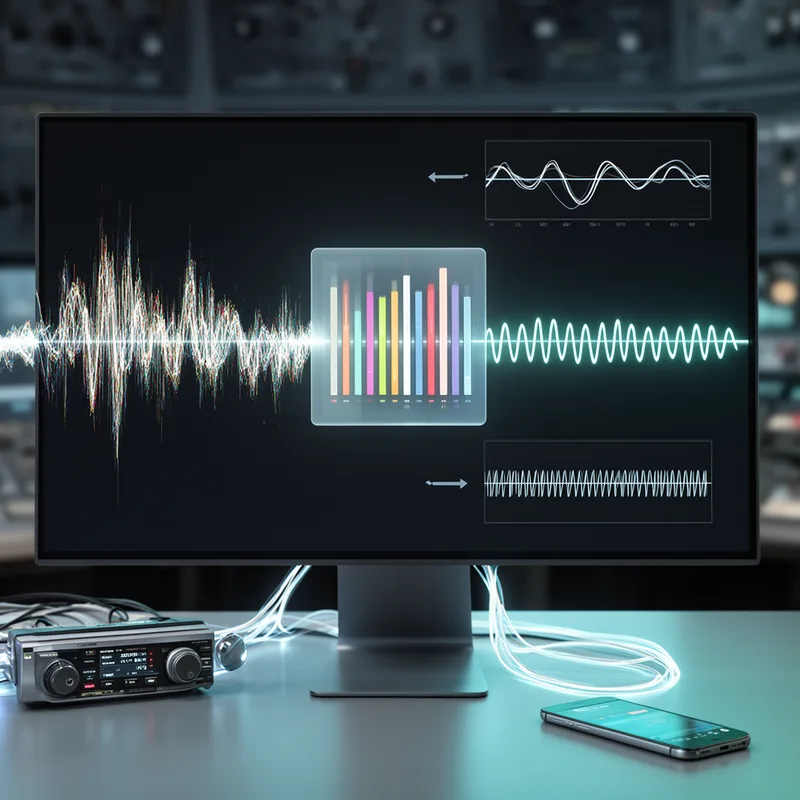
Equalization compensates for signal degradation by increasing the high-frequency components to improve resolution and restricting bandwidth to reduce noise.
Academic text (1996) -
The process of equalization ensures that the audio signal is clear and consistent across all frequencies.
-
In telecommunications, equalization is used to adjust the received signal so that it maintains a flat frequency response.
Surface Forms
Morphology
Etymology
Equalization in telecommunications comes from equal meaning 'even' and -ization meaning 'the act of making'. A helpful image is to think of smoothing out bumps: engineers 'even out' the parts of a signal so the receiver gets a clear, flat result instead of loud and quiet bumps.

