

epizoology
- noun
- /ˌɛpɪˈzuːələdʒi/
- Specialized
- Understanding the epizoology of rabies in wild animals is essential for preventing the spread to domestic pets.
Examples
-
Further investigation of the epizoology of hantaviruses and possible risks to humans in the southern Amazon Basin of Peru is warranted.
Academic text (2014) -
Further studies of the epizoology of hantaviruses in this region are warranted.
Academic text (2014) -
The scientists focused on the epizoology of diseases affecting local wildlife to better understand the outbreak.
-
Research into the epizoology of the avian flu has provided crucial insights for wildlife conservation efforts.
Synonyms

 13
5.8
13
5.8

The study of how diseases spread and how to control them in groups of people
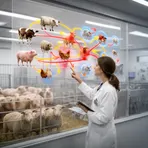
The study of how disease spreads among animals
Surface Forms
Morphology
epizoology = zoology (semi-transparent) = epi + zoology + epi
Formed by adding the scientific prefix 'epi-' to 'zoology'; the specialized sense 'study of disease outbreaks among animals' requires knowledge of 'epi-'/epidemiology and may not be obvious to an average B1 learner who only knows 'zoology'.
Etymology
Epizoology comes from Greek parts epi- 'on', zoo- 'animal' and -logy 'study', with zoo- being the same root as the everyday word zoo. So epizoology is the 'study of disease on animals', which explains why it means the scientific study of disease outbreaks in groups of animals.