
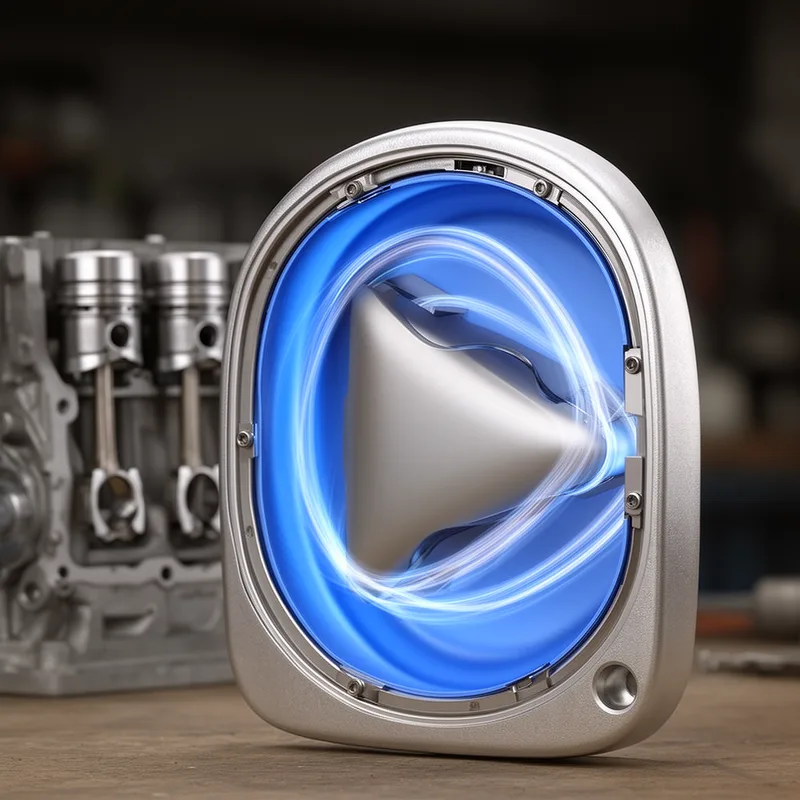
epitrochoidal engine
- noun
- /ˌɛpɪtrəˈkoɪdəl ˈɛnʤɪn/
- Specialized
- The Mazda RX-7 famously used an epitrochoidal engine to achieve its unique power output.
Examples
-
Engineers were fascinated by the efficiency of the epitrochoidal engine compared to conventional piston engines.
-
The epitrochoidal engine achieves high performance by using a unique rotor design that eliminates reciprocating motion.
-
An epitrochoidal engine eliminates the need for many moving parts found in traditional designs.
-
The epitrochoidal engine is known for its efficiency.
-
Many engineers prefer the epitrochoidal engine design.
-
Due to its innovative design, the epitrochoidal engine requires fewer components, enhancing its efficiency and reliability.
-
The development of the epitrochoidal engine has sparked new interest in rotary engine technology among automotive engineers.
Synonyms


 1
6.9
1
6.9
A machine that makes power by turning parts around a central point, used in cars or planes

A car engine that makes power using a spinning three-sided piece instead of moving pistons
A motor that makes power by a three-sided rotor turning inside an oval chamber
Surface Forms
Morphology
epitrochoidal + engine
This is a straightforward adjective + noun combination: 'epitrochoidal' describes the shape or motion and 'engine' names the machine, so the meaning 'an engine that uses/has an epitrochoidal motion/shape' is directly derivable from the constituents. However, the adjective is a highly technical, rare term not found in common learner dictionaries, so although compositionally transparent it will be inaccessible to most B1 learners who do not already know that specialized word.
Etymology
Epitrochoidal engine comes from the curved path its moving part makes, the epitrochoid, which you can picture as a small shape rolling around inside a ring and drawing a smooth, odd oval. Because the part keeps 'turning' in that rolling path instead of moving 'back-and-forth', the name tells you the engine works in a different way.