
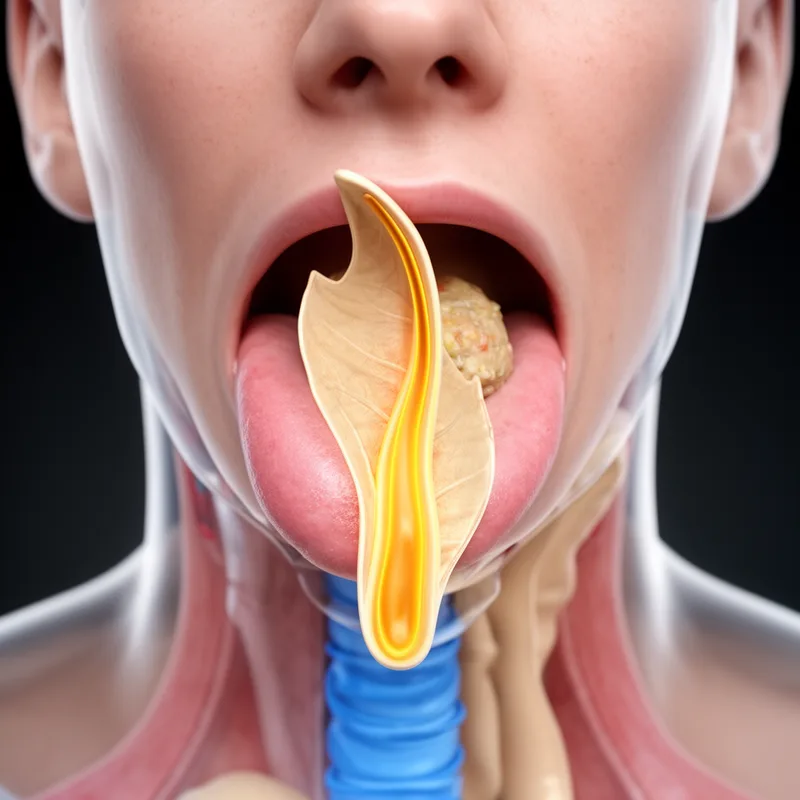
epiglottic cartilage
- noun
- /ˌɛpɪˈɡlɒtɪk ˈkɑːrtɪlɪdʒ/
- Specialized
- The epiglottic cartilage helps prevent food from entering the trachea.
Examples
-
During swallowing, the epiglottic cartilage closes over the larynx.
-
The epiglottic cartilage helps the epiglottis maintain its shape during swallowing.
-
Damage to the epiglottic cartilage can affect normal breathing and swallowing functions.
-
During surgery, the surgeon carefully identified the epiglottic cartilage to avoid injury.
-
Damage to the epiglottic cartilage can affect normal breathing and swallowing functions.
-
During surgery, the surgeon carefully identified the epiglottic cartilage to avoid injury.
-
The epiglottic cartilage helps the epiglottis maintain its shape during swallowing.
Surface Forms
Morphology
The term is compositionally built from 'epiglottic' (of or relating to the epiglottis) + 'cartilage' (connective tissue), so its meaning — the cartilage that forms part of the epiglottis — is directly derivable from the constituents. Although the phrase is technical, the semantic relation is transparent and parallels noun + noun/adjective constructions in other languages, so a learner who knows both words would understand it.
Etymology
Epiglottic cartilage is the thin, flexible 'plate' of cartilage that makes the main part of the epiglottis, the small 'lid' at the top of the throat. Imagine this soft 'lid' folding down to cover the windpipe when you swallow to keep food out of your lungs — that is why the epiglottic cartilage holds the epiglottis' shape and helps protect the airway.

