
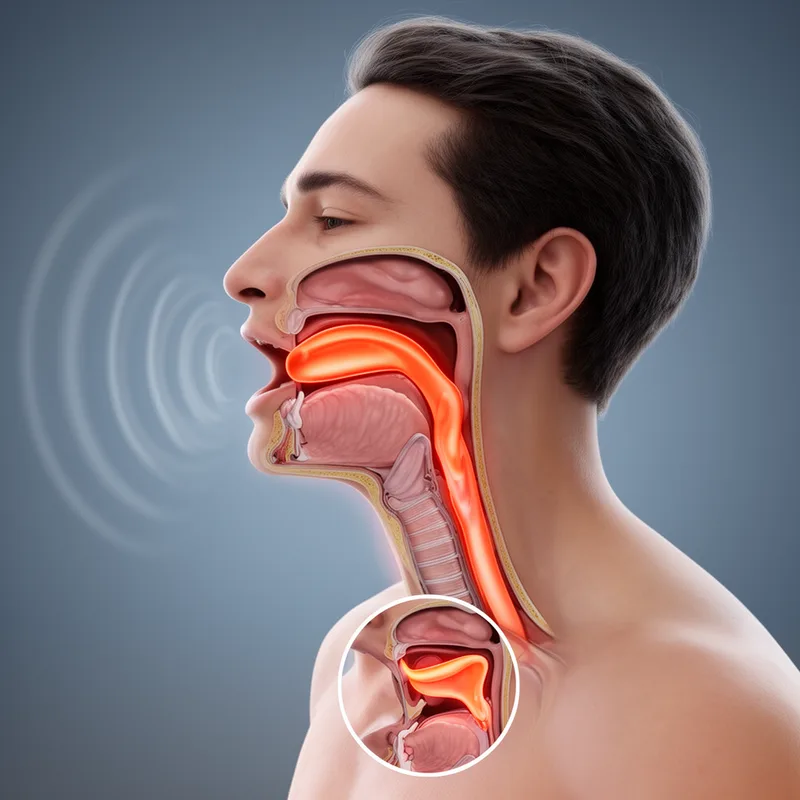
epiglottal


 1
9.4
- adjective
- /ˌɛpɪˈɡlɑːtəl/
- Specialized
- The epiglottal sounds are fascinating to linguists.
Examples
-
The doctor explained that epiglottal inflammation can affect a person's voice.
-
Is the epiglottal feature common in all languages?
-
An epiglottal sound is produced by using the epiglottis in the vocal tract.
-
Linguists study rare epiglottal consonants found in some languages of the Caucasus.
-
The linguist studied the epiglottal sounds produced by the speaker.
-
In some dialects, epiglottal consonants play a significant role in pronunciation.
-
The child mimicked epiglottal fricatives during his speech therapy session.
Synonyms

Relating to the small flap in the throat that covers the windpipe when you swallow
Surface Forms
Morphology
epiglottal = glottal (semi-transparent) = epi + glott + al
While the components 'epi-' and 'glottal' are clear, the specific anatomical reference may not be immediately obvious to all learners.
Etymology
Epiglottal comes from epiglottis, the small flap in your throat, and from the parts epi- 'above' and glottis 'voice opening'. So something epiglottal is made with or near the epiglottis, which is why doctors and language experts use the word for throat conditions and for sounds made there.