
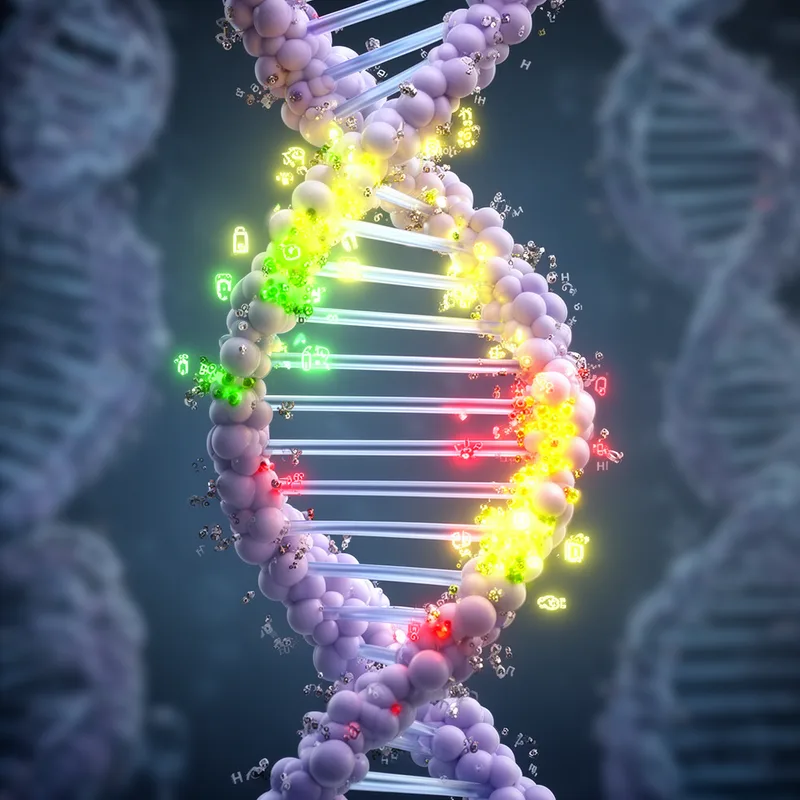
epigenome


 1
9.9
- noun
- /ˌɛpɪˈdʒiːnoʊm/
- Specialized
- The epigenome consists of all the chemical changes to DNA that determine how genes are expressed in a cell.
- epigenome-wide methylation
- epigenome-wide association study
- epigenome-wide modifications
Loading YouTube…
Watch on YouTubeThere's no heritable epigenome here, nothing whatsoever.
- There's no heritable epigenome here, nothing whatsoever.
- So the genome is the DNA and the epigenome is anything on top of the DNA.
- All these things wash over our genes and regulate the epigenome, which is modifiable.
- And it turns out it's not your genome, it's your epigenome EPI from the Greek word for above.
- But we're also in fact largely determined by what's called not the genome, which is the DNA, but the epigenome.
- Well, if it doesn't change the epigenome and that is what I believe drives the majority of ageing, then I'm not concerned.
Examples
-
It's also easier to change your microbiome than it is to change your epigenome in a predictable way.
-
And in fact, studies are showing us that our epigenome is actually affecting what we're passing off to our offspring.
-
So all of a sudden your epigenome is becoming confused.
-
We talk about the epigenome a lot in aging.
-
Once we understand how our epigenome influences us, we might be able to influence it too.
-
So the key to this sort of breakdown of the epigenome is DNA damage.
-
Little is known about what normal epigenomes look like.
Academic text (2012) -
All these things wash over our genes and regulate the epigenome, which is modifiable.
-
Published evidence, mainly from non-brain tissues, indicates BPA may have the ability to affect the epigenome, leading to long-lasting changes in gene expression.
Academic text (2012) -
Our study of maternal smoking in relation to epigenome-wide DNA methylation in newborns in the MoBa cohort is the largest and most extensive that we know of.
Academic text (2012)
Surface Forms
Morphology
Etymology
Epigenome combines epi- (meaning 'on' or 'above') and genome (meaning 'the full set of genes'), so it describes the 'marks on' our genes. These chemical 'marks' help turn genes on and off, which is why the epigenome controls how cells act.