

epigenesis
- noun
- /ˌɛpɪˈdʒɛnɪsɪs/
- Specialized
- Epigenesis is essential for understanding how organisms develop from a single fertilized egg into complex life forms.
Examples
-
Despite differences in individual experiences, each person's neural architecture is shaped through common patterns of brain development, including neuroplasticity, neurogenesis, and epigenesis.
Academic text (2015) -
The idea of epigenesis will please those researchers who, like the present reviewer, have seen moderately salt-tolerant algae become strongly halophilic when the salt concentration of the growth medium is increased.
Academic text (2003) -
Epigenesis refers to the relationship of environmentally derived neural activity and the influence of genetic code on neural activity.
Academic text (2015) -
The study of epigenesis reveals how environmental factors can influence the developmental changes in organisms.
-
Understanding epigenesis helps explain the gradual transformation of a zygote into a fully formed organism.
Synonyms

 1
4.4
1
4.4

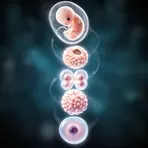
A process in which a very early baby forms and grows before birth

 1
9.0
1
9.0
A process when an embryo forms and grows from a fertilized egg or single cell

The development of an animal or plant from a single cell to a fully grown adult
Surface Forms
Morphology
Etymology
Epigenesis comes from the Greek parts epi- 'upon' and genesis 'birth', like in epicenter for epi- and the word genesis for 'origin'. So in biology epigenesis is the idea that a living thing develops step by step after the egg, with new parts forming 'upon' earlier ones.