
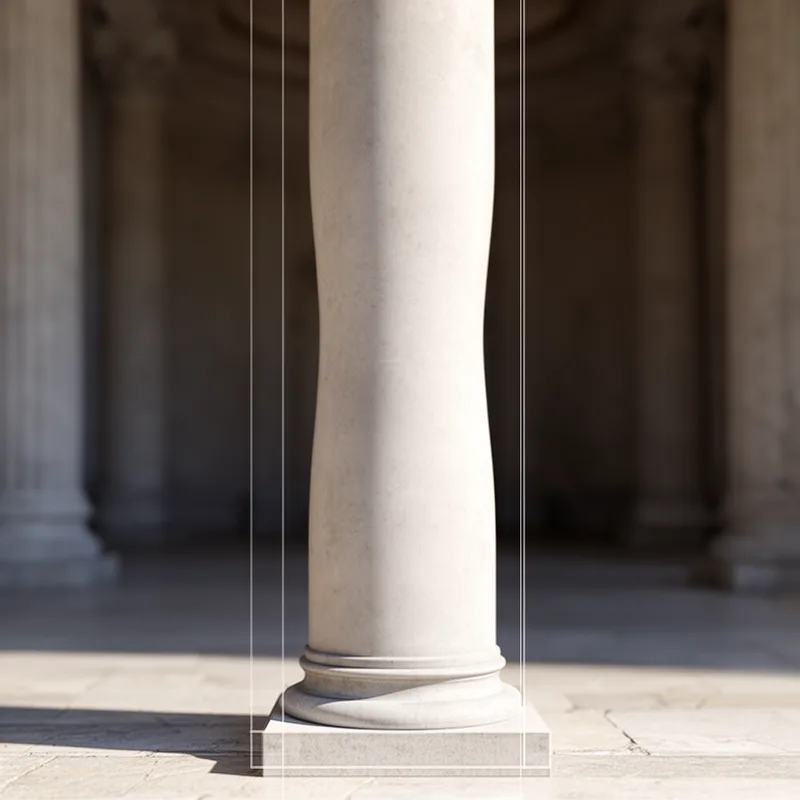
entasis


 1
9.9
- noun
- /ɛnˈteɪsɪs/
- Specialized
- Without entasis, the columns would appear slightly concave to the human eye.
Examples
-
The ancient Greeks perfected entasis to create visually appealing columns in their temples.
-
Modern architects sometimes use entasis to echo classical design in contemporary buildings.
-
The ancient Greeks used entasis to enhance the beauty of their columns.
-
Can you explain the concept of entasis in architecture?
-
Modern architects often incorporate entasis in their designs to create a sense of harmony in their buildings.
-
The ancient Greeks skillfully employed entasis in their columns to counteract the optical illusion of concavity.
-
In classical architecture, entasis is used to give columns a graceful, curved appearance that enhances their visual impact.
Surface Forms
Etymology
Entasis comes from Greek parts en- 'in' and tasis from a root meaning 'to stretch', the same idea you see in tension. So entasis is a small 'stretch' or outward curve in a column that makes the column look straight to the eye.