
enharmonic


 1
9.1
- adjective
- /ˌɛn.hɑːrˈmɒn.ɪk/
- Specialized
- In music theory, enharmonic notes are often used to create interesting harmonic progressions.
Examples
-
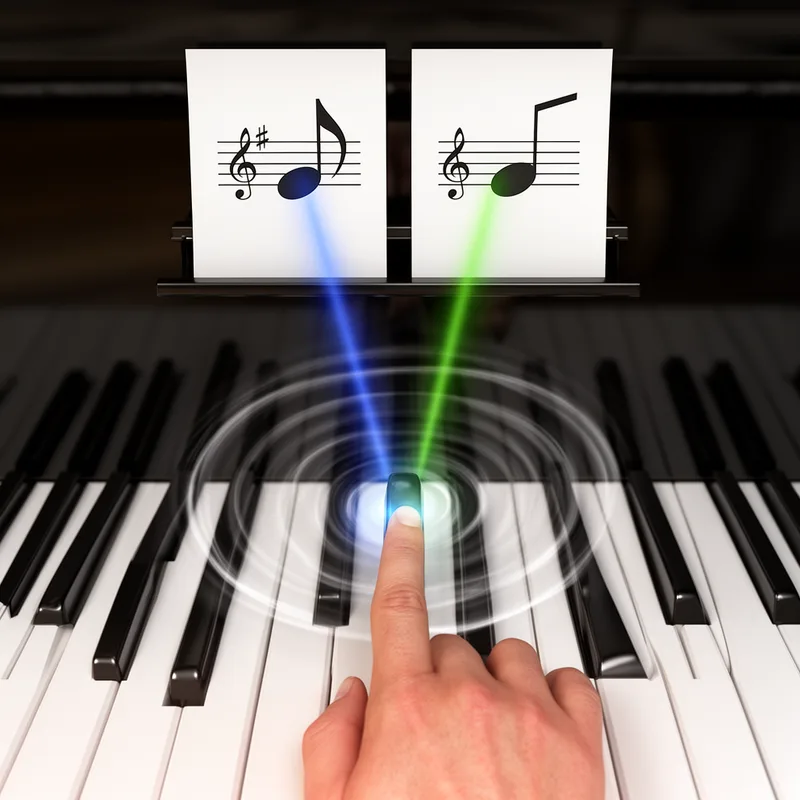
The notes C-sharp and D-flat are considered enharmonic because they sound the same but are notated differently.
-
This became known as "equal temperament," and sharps and flats became "enharmonic equivalents."
Academic text (1997) -
And we have we have this in both the enharmonic expression and in the rotational constant operator.
-
Figure 3 illustrates an example of an assignment that reinforces the concept of using enharmonic notes.
Academic text (1997) -
Understanding enharmonic relationships helps musicians translate between different key signatures.
Synonyms
 1
8.8
Sounds the same as another word but has a different meaning or spelling
Surface Forms
Morphology
Etymology
Enharmonic comes from Greek parts en- 'in' and harmonic from harmony 'agreement of sound', so it literally means 'in harmony' and helps you remember that enharmonic notes sound the same even when they are written differently.