
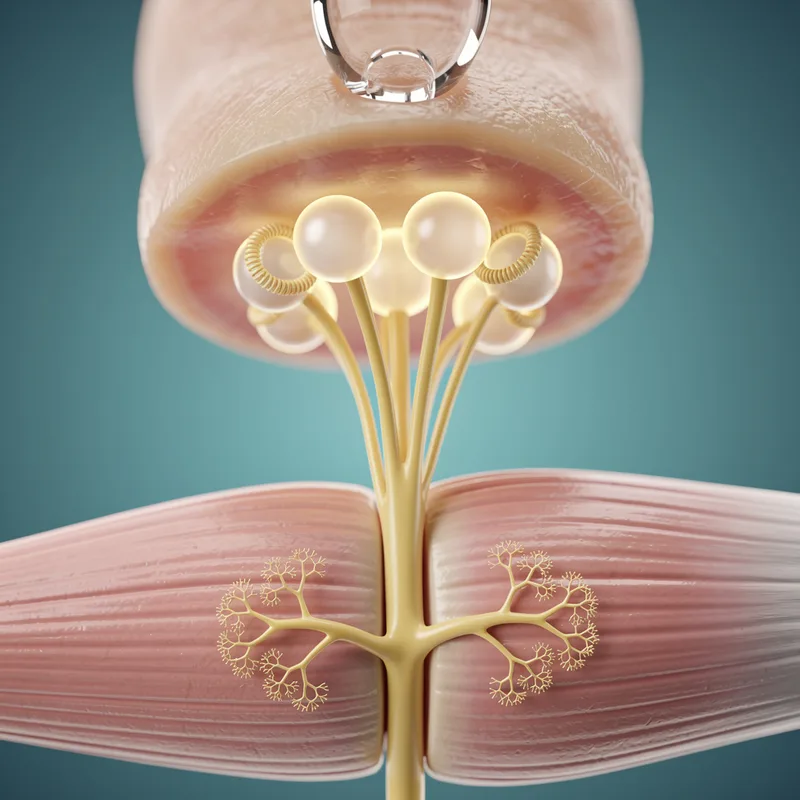
end organ
 1
8.6
1
8.6

- noun
- /ɛnd ˈɔrɡən/
- Specialized
- The doctor explained that the patient's end organ was affected by high blood pressure.
- end organ damage
Examples
-
Regardless of the cause, middle ear trauma through the external auditory canal may result in permanent end-organ damage and, in some cases, a dead ear.
Academic text (2006) -
He has had an ECG and blood checks, which were all normal, and so there is no end-organ damage from his elevated blood pressure.
Academic text (2011) -
Some authors hypothesize that they are both derived from an end-organ genetic abnormality in which an unidentified trophic factor is responsible for the development of these two pathologies.
Academic text (2015) -
To assess the effects of diabetes, they performed tests to check for any end organ complications.
-
During the examination, the medical team monitored signs of end organ failure in the patient.
Synonyms
 9
4.1
9
4.1
A tiny part of the body that sends feelings like touch or pain to the brain

The small tip of a nerve that sends and receives signals
Surface Forms
Morphology
The phrase is compositionally built from 'end' (outer extremity) + 'organ' (a body part), so a learner who knows both words can infer it denotes an organ located at an end or extremity. Although the term is technical, the spatial/positional meaning is directly derivable and follows common compounding patterns, making it accessible to learners who know the constituents.
Etymology
End organ pictures a tiny organ sitting at the very end of a nerve, like a light at the end of a wire or a button on a cable that 'feels' a touch or helps a muscle 'act'. So an end organ is the small special part at a nerve ending that 'senses' things or 'causes' movement.