

end-of-life choice


 1
6.2
1
6.2
- noun
- /ˈɛnd əv laɪf tʃɔɪs/
- Formal
- They were asked about family members whose opinions are or will be important to them in considering an end-of-life choice.
Examples
-
We began to discuss things like end-of-life choices.
Blog text (1) -
This applies to our lifestyle decisions, end-of-life choices, etc.
Blog text (32) -
The last phase of the analysis involved articulating the value units and themes that were influencing individuals' end-of-life choices by presenting them in a visual format that conveys the essence of the experience (van Manen, 1990).
Academic text (2001) -
She consulted with her family about their end-of-life choice to ensure that her wishes were respected.
-
Doctors often provide guidance on making an end-of-life choice that focuses on comfort care for terminal patients.
-
The workshop helped participants understand the emotional aspects of discussing end-of-life choices with loved ones.
Synonyms
 ∞
1.0
∞
1.0
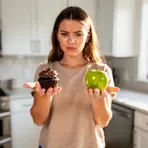
One thing you pick or the act of picking from several things
 ∞
2.2
∞
2.2
A choice between two or more things
How Aggressive

Surface Forms
Morphology
end-of-life + choice
The phrase is compositionally built: 'end-of-life' (the period near the end of a person’s life) modifies 'choice' (a decision), so a learner who knows 'end', 'life' and 'choice' can infer it refers to a decision about care at life’s end. This noun + noun (or compound modifier + noun) pattern is common across languages, making the meaning immediately derivable for a B1 learner.
Etymology
End-of-life choice gives a simple picture: end-of-life means the time near death and choice means a decision. Imagine someone at a fork in the road deciding whether to 'keep or stop treatment' or to focus on comfort, so it means a decision about care when life is ending.