
encomendero


 1
9.9
- noun
- /ˌɛnkəˈmɛndɛroʊ/
- Archaic
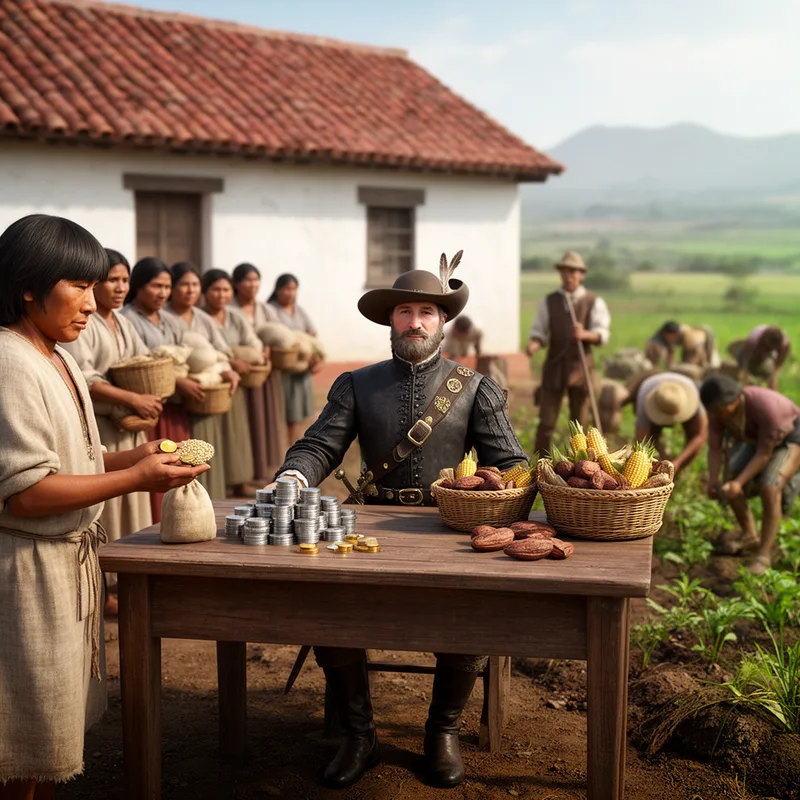
- In contrast, under the Spanish encomienda system, large numbers of Andean men were constantly removed from their communities for both labor in the encomenderos' enterprises and for military service in expeditions against "hostile" tribes, or in the many civil wars among the Spaniards themselves.
- encomenderos and merchants
- labor for encomenderos
Examples
-
The encomenderos supported a whole retinue of Spanish family members and retainers with the proceeds of the Indians' tribute and labor.
Academic text (1999) -
In the colonial era, the encomendero was responsible for collecting tribute from the indigenous people in his area.
-
Where encomienda survived, tribute was paid in part or whole to the encomenderos.
Academic text (2001) -
But encomenderos were not the only colonial agents who took advantage of the market for indigenous textiles.
Academic text (2000) -
Under this system, the encomendero had effective control of the land and Indian labor, as well as the crown-given right to exact tribute within his encomienda grant.
Academic text (1992) -
In sixteenth-century Trujillo, at least, indigenous cloth provided by far the largest share of tribute income to coastal encomenderos and a substantial part of the income of the highland encomiendas as well (table 2).
Academic text (2000) -
The duties of an encomendero included overseeing the labor force and ensuring that the tribute was paid regularly.
-
Many encomenderos abused their power, demanding excessive labor from the indigenous communities under their control.
Surface Forms
Etymology
Encomendero comes from the Spanish verb encomendar meaning 'to entrust' plus the ending -ero meaning 'person who', similar to the English '-er'. So an encomendero was literally the person 'entrusted' by the Spanish crown to look after local people and to collect taxes and labour from them, which is why the word names those colonial officials.