
en passant
- noun
- /ɑ̃ pɑ̃sɑ̃/
- Specialized
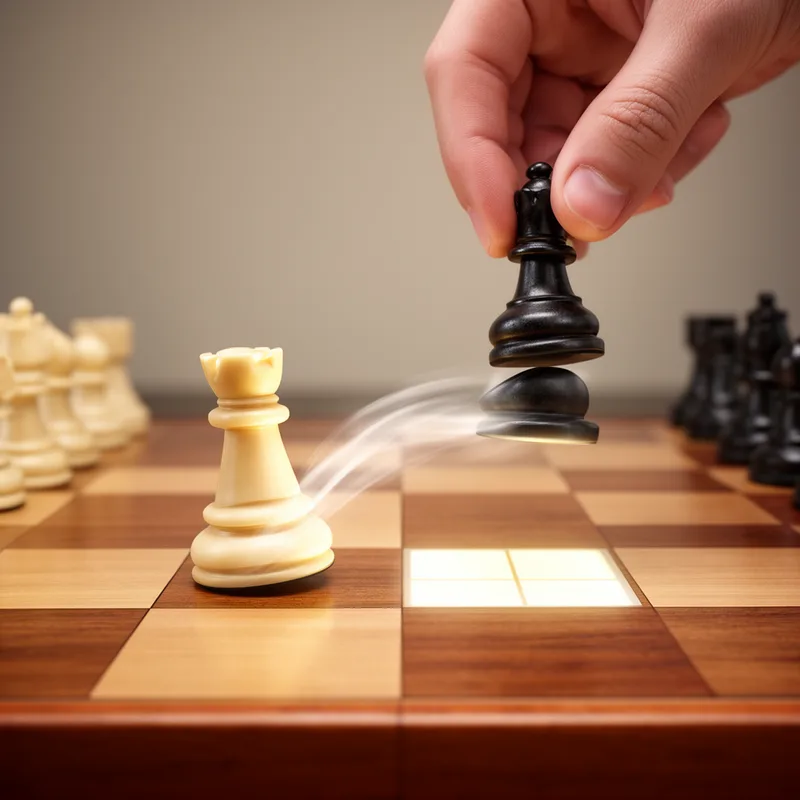
- During the chess match, she surprised her opponent by capturing his pawn en passant.
Examples
-
Pawn to bishop six, says Dr. Samson, "Attention Karl, or I will take you en passant."
Fiction book (2000) -
In a crucial moment, he played his pawn to capture en passant and gain an advantage.
-
While explaining the rules, the instructor demonstrated how to take a pawn en passant.
Surface Forms
Morphology
en + passant
This is a French chess term (a loan phrase) whose constituents are not English words for most learners, so a B1 learner who knows English vocabulary will not be able to derive the technical capture rule from 'en' and 'passant'. Even if someone recognised the literal French sense ('in passing'), that literalness does not fully convey the specialized chess rule, so the meaning is not transparently recoverable from the parts.
Etymology
En passant is a chess term from French meaning 'in passing'. It names a special capture: if a pawn moves two squares, an opponent's pawn can take it as if it had only moved one and was 'passing' by, so the capture happens 'in passing'.

