
emulsification


 1
6.3
1
6.3
- noun
- /ɪˌmʌl.sɪ.fɪˈkeɪ.ʃən/
- Specialized
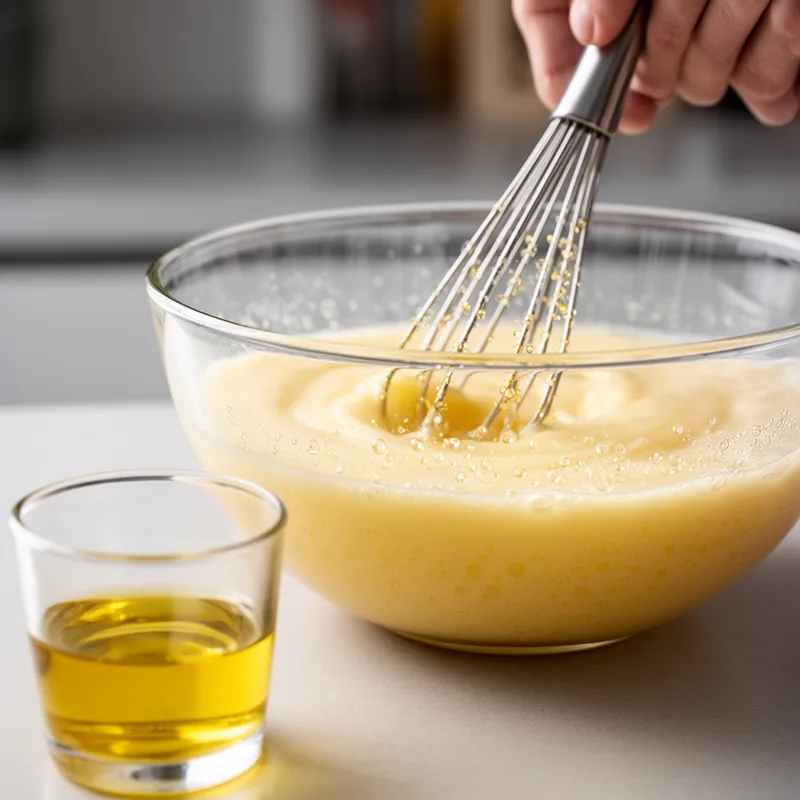
- In cooking, emulsification helps to mix ingredients like mayonnaise, where oil is suspended in vinegar or lemon juice.
- emulsification properties
- emulsification properties of protein
Examples
-
The emulsification activity was pH-dependent, with alkaline pH improving this property more than acidic pH.
Academic text (2014) -
The emulsification properties play an imperative role in the stability of high-fat food products by reducing the rate of oxidative rancidity.
Academic text (2014) -
But then I thought maybe... just maybe... you could raise the viscosity... by adding a complex glucose derivative during the emulsification process.
-
Once in a rare while, I'll end up with a little water that just won't incorporate because the emulsification process finishes, and for whatever reason, it didn't get included.
Blog text (23) -
The emulsification properties of the protein isolate make it a promising food ingredient for utilization in cake batters, bread, meat sausages, salad dressing, frozen desserts, and dairy products.
Academic text (2014) -
Emulsification is essential for making a smooth salad dressing by combining emulsification oil and vinegar into tiny droplets.
-
The process of emulsification allows oil and water to blend together, creating a creamy sauce that clings to pasta.
How Mixed

Surface Forms
Morphology
emulsification = emulsify (transparent) = emuls + ify + cation
The noun is formed regularly from the verb 'emulsify' with the standard abstract/process suffix, so the relationship is straightforward.
Etymology
The word emulsification comes from the Latin root emulgere, which means 'to milk', because an emulsion is like milk: tiny drops of one liquid spread through another. So, emulsification is the process of making oil and water mix as very small droplets to form a smooth, milky blend.