

emotivism
- noun
- /ɪˈmoʊtɪˌvɪzəm/
- Specialized
- "Emotivism"—that is to say, the doctrine that all evaluative judgments are merely expressions of personal preference—has won the day.
- moral emotivism
Loading YouTube…
Watch on YouTubeAre these like descriptions of our attitudes or is this there are question like an on emotivism?
- Are these like descriptions of our attitudes or is this there are question like an on emotivism?
Examples
-
In discussions about morality, proponents of emotivism argue that feelings take precedence over factual statements.
-
Whether people are talking about social issues or about the ethical significance of literature and the other arts, emotivism empties moral discussion of any real content.
Academic text (1998) -
McIntyre says that that's a sign of emotivism in our culture.
-
If relativism is true or emotivism is true, then there's not much point in ethics.
-
What MacIntyre calls "emotivism" is what soap-opera characters and many students simply call "everyone deciding what's right or wrong for themselves," a view of morality reiterated with billboard simplicity everywhere in contemporary culture.
Academic text (1998) -
If, then, neither emotivism nor epistemological relativism gets us off the hook for taking moral and ethical considerations into account, and if such considerations do indeed saturate life, then it follows that ethical criticism can claim a natural and important function in the study and evaluation of literature.
Academic text (1998) -
MacIntyre also asserted that the reintroduction of Aristotelian conceptions of virtue challenges us to confront the reduction of ethics to emotivism and thereby improve the current situation.
Academic text (2003) -
According to emotivism, saying something is wrong means we disapprove of it emotionally.
-
Emotivism suggests that moral judgments reflect our emotional attitudes rather than objective truths.
Synonyms
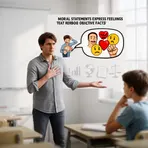
The view that moral statements show feelings, not true facts
How Moral

Surface Forms
Morphology
Etymology
Emotivism comes from emotion ('feeling') and the ending -ism ('a theory' or 'belief'), like other ideas with -ism. So, emotivism is the idea that moral statements are mainly expressions of feeling—saying 'stealing is wrong' shows disapproval, not a simple fact.

