

eminence
 1
8.8
1
8.8

- noun
- /ˈɛmɪnəns/
- Specialized
- The total length of each tibia was determined by measuring from the intercondylar eminence to the tip of the medial malleolus.
- tibial eminence
- eminence fracture
Examples
-
It's called the ganglionic eminence humans, and in rodents there's a very clear medial ganglionic eminence and lateral ganglionic eminence.
-
If tolerated, most pediatric orthopaedic surgeons prefer to treat nondisplaced tibial eminence fractures in slight extension.
Academic text (2006) -
Tibial eminence fractures occur most commonly in boys who are 10-14 years old.
Academic text (2006) -
Malar rash: fixed erythema, flat or raised, over the malar eminences, tending to spare the nasolabial folds.
Academic text (2017) -
The tibial eminence is critical for the attachment of ligaments in the knee joint.
-
Surgeons often examine the eminence on the os coxae during hip surgery.
-
In anatomy, the eminence of the ulna provides a point for muscle attachment.
Synonyms
 4
5.5
4
5.5
A part that sticks out from the area around it, like a small hill
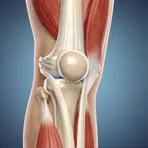 1
9.9
1
9.9
A bony bump above a joint where muscles or ligaments attach
 1
9.9
1
9.9
A large bump of bone near the top of the thigh bone where muscles attach
 1
8.9
1
8.9
A small rounded bump on a bone where a muscle or ligament attaches


 1
9.8
1
9.8
A rounded bump on a bone where a muscle or ligament can attach
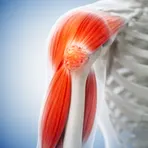
A raised area on the outer part of the upper arm bone where the shoulder muscle attaches

A rounded bump on the forehead above each eye
Compounds

- Literature
1
9.9
A person who has a lot of influence behind the scenes without an official role
- Specialized
A raised area on the outer part of the upper arm bone where the shoulder muscle attaches
How Raised

Surface Forms
Morphology
eminence = eminent (semi-transparent) = emin + ence
The noun is formed from 'eminent' with the noun-forming suffix '-ence', but the anatomical sense is a specialized extension of 'standing out' rather than a fully predictable everyday meaning.
Etymology
Eminence comes from the Latin eminere, meaning 'to stand out' or 'project'. In anatomy, an eminence is a raised bony part that 'stands out' on a bone, so the origin explains its raised shape.