
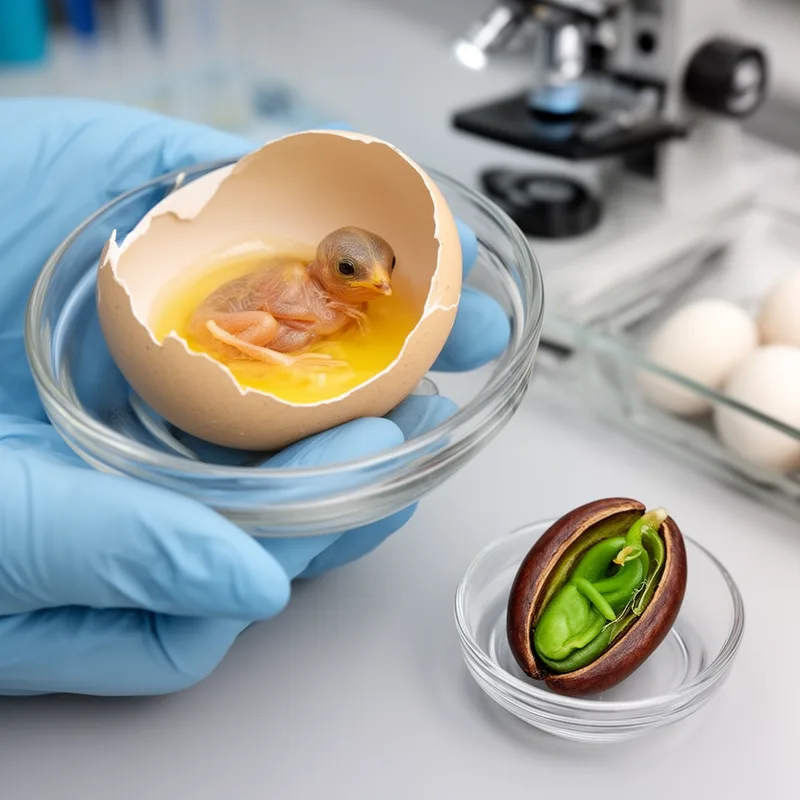
embryonated
- adjective
- /ˌɛm.briˈoʊ.neɪ.tɪd/
- Specialized
- PHOTO (COLOR): RIGHT: Veterinary medical officer Daniel King inoculates embryonated chicken eggs with samples collected from feral and domestic birds possibly infected with viruses. After incubating for several days, the eggs will be tested for virus presence and type.
- embryonated eggs
Examples
-
The scientist examined the contents of the embryonated chicken eggs to study their development.
-
The virus was propagated in the allantoic cavity of 9-day-old embryonated chicken eggs by the standard protocol (Dennis, 2008) under sterile conditions.
Academic text (2015) -
It is well established that the infective stages of A. lumbricoides, the embryonated eggs, have enormous capacity for withstanding the environmental extremes of urban environments.
Academic text (2007) -
In her research, she noted that the embryonated seeds showed signs of germination.
-
The laboratory uses embryonated eggs to grow viruses for vaccinations.
Synonyms

 28
7.0
28
7.0

About the first stage of life inside an egg or the mother's body before birth

 1
9.3
1
9.3
Relating to the early stage before birth or hatching

At an early stage, just beginning to form
How Developed
14
1.0

- Specialized
- Philippine
1
9.9
- Specialized
8
2.9
- Specialized
3
5.1
Surface Forms
Morphology
embryonated = embryonate (transparent) = embryo + ate + ed
The final step is a regular participial suffixation (-ed) on the verb 'embryonate', a straightforward morphological operation.
Etymology
Embryonated comes from embryo, a word meaning 'young one' or early life that grows inside an egg or seed. So an embryonated egg or seed is one that has this developing young life inside it.