
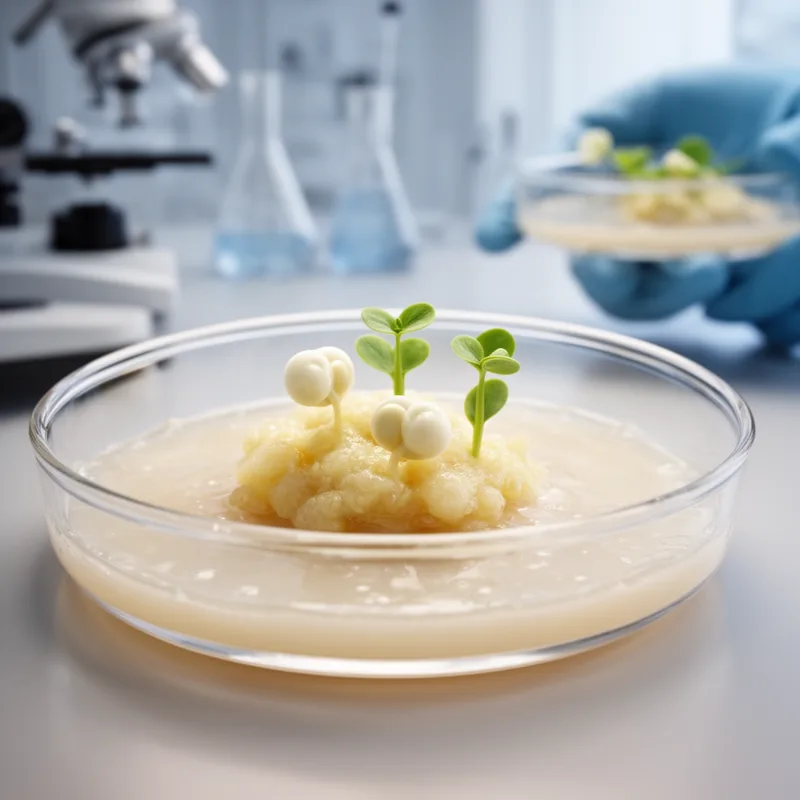
embryogenic


 1
8.9
- adjective
- /ˌɛmbrioʊˈdʒɛnɪk/
- Specialized
- In plant tissue culture, embryogenic development occurs when cells differentiate to create embryos.
- embryogenic masses
Examples
-
Anther-derived calli showed development of embryogenic masses upon transfer to starvation media (MS salts); however, the embryos did not develop further and could not germinate.
Academic text (2015) -
The calli, when transferred to starvation media, showed embryogenic masses that did not regenerate into plants and developed non-functional zygote-like shoot apical meristem (SAM).
Academic text (2015) -
Hence, the current study was initiated to explore anthers of cultivar Faisalabad long for their genotypic potential to develop embryogenic calli on different media and culture conditions.
Academic text (2015) -
The calli showed development of embryogenic masses on starvation media (MS media) after 3 weeks of culture on the surface of the calli; however, no further embryo development could be induced after 8-10 weeks of subcultures.
Academic text (2015) -
The researchers observed that the embryogenic cells were able to form new embryos under specific conditions.
-
The study focused on embryogenic processes to enhance the efficiency of plant regeneration in laboratory conditions.
Synonyms
 37
7.0
About the first stage of life inside an egg or the mother's body before birth
 1
9.3
Relating to the early stage before birth or hatching
 1
7.3
About the development of embryos before birth
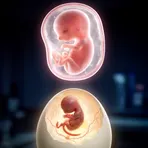
Relating to embryos and their early growth before birth or hatching
Surface Forms
Morphology
Etymology
Embryogenic comes from embryo, meaning 'young one', and the part -genic, meaning 'producing', like in genetic or generate. So, embryogenic describes something that can 'produce' or form embryos.