

elicitor
- noun
- /ɪˈlɪsɪtər/
- Specialized
- Core disgust elicitors include rotten food, vomit, feces, decaying flesh, and any substance expelled from the body (e.g., mucus).
- disgust elicitors
- core elicitors
Examples
-
Once disgust to core disgust elicitors is established, other objects with similar perceptual characteristics will also evoke disgust.
Academic text (1999) -
Also, disgust elicitors can probably be separated into different domains to more precisely predict behavior and develop strategies to deal with each type.
Academic text (1999) -
Identify key situational elements and types of elicitors across the age span for specific temperament attributes.
Academic text (1998) -
Young concentrates on cases in which the connections between perception and affect are relatively encapsulated and constrained by a specific range of elicitors.
Academic text (1999) -
Developmental variation in the elicitors of temperamental responses such as fear or pleasure has been studied in the early years through contrived laboratory situations.
Academic text (1998) -
Those neural circuits, which are discrete in their monitoring and controlling function and produce rapid, phenomenally salient responses to specific elicitors, are the affect programs.
Academic text (1999) -
Core disgust elicitors, animals that evoke both fear and disgust, or reactions to the perceived presence of contagion may be distinct enough to require different educational strategies.
Academic text (1999) -
Relate temperament to the organization of the subjective world by systematically exploring how developmental changes in the situational elicitors correspond to changes in the meaning of stimuli.
Academic text (1998) -
The therapist used an elicitor to help the patient express their emotions during the session.
-
Researchers identified an elicitor that effectively triggered the participants' responses in the study.
Synonyms

 289
4.5
289
4.5

Something that causes a person, animal, or plant to respond
 4
3.4
4
3.4
A short signal that tells someone to speak or act


 1
8.5
1
8.5
A person or thing that makes something happen
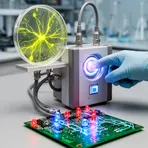
A device that starts or increases electrical and biological activity
How Provoking

Surface Forms
Morphology
Etymology
Elicitor comes from the Latin verb elicit, which means 'to draw out', and the prefix e- means 'out'. In this sense an elicitor is a question or prompt that 'pulls out' a response from someone, just like the verb elicit.