
electrostatic precipitator
- noun
- /ɪˌlɛk.trəˈstæt.ɪk prɪˈsɪp.ɪ.teɪ.tər/
- Specialized
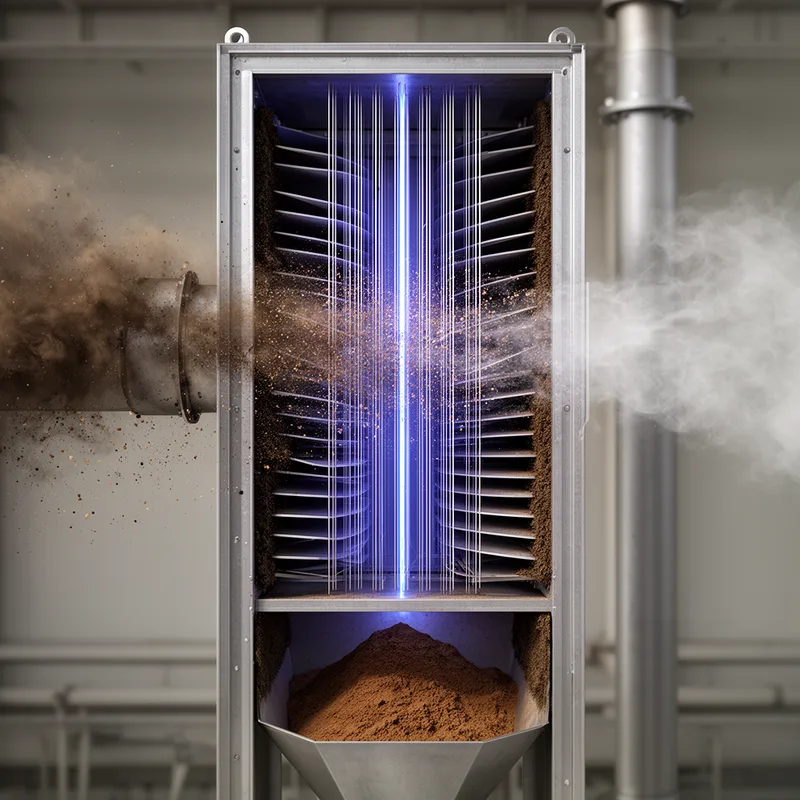
- Electrostatic precipitators collect particles on a series of flat plates or cells enclosed in a metal frame.
Examples
-
Coal washing and the installation of electrostatic precipitators are relatively cost-effective ways to reduce coal's environmental and health impact.
Academic text (1995) -
After passing through the wet scrubber, the gas flowing at 130 degrees F passes through an electrostatic precipitator that removes solid particles.
Academic text (1995) -
His research accomplishments include the study of particle synthesis and collection, including the development of electrostatic precipitators.
Academic text (2007) -
Particulate matter can be removed from flue gases using electrostatic precipitators (ESPs) and fabric filters.
Academic text (1993) -
The factory installed electrostatic precipitators to minimize air pollution by capturing fine particulate matter.
-
Particulate matter can be removed from flue gases using electrostatic precipitators (ESPs) and fabric filters.
Synonyms


 1
9.5
1
9.5
A device that removes dust from smoke or gas using electric charge

A machine that uses electricity to remove dust from factory smoke

A machine that removes dust from the air in workshops and factories

A device that collects particles from air for testing
How Effective

Surface Forms
Morphology
The meaning ('a device that removes dust and other fine particles from gases using electrostatic charges') is directly compositional from 'electrostatic' (relating to static electricity) + 'precipitator' (an agent that precipitates or removes particles). Although the term is technical, the adjective+noun structure clearly signals a device that uses electrostatics to precipitate particles, so a B1 learner who knows both constituents can infer the meaning.
Etymology
Electrostatic precipitator gets its name from how the machine works: it gives tiny dust particles an electric charge so they stick to metal plates and fall out of the gas. The word electrostatic means 'electric charge' and precipitator comes from a word meaning 'to fall', so the name describes 'a device that removes dust from gas'.