

electrooptic
- adjective
- /ɪˌlɛk.trəʊˈɒp.tɪk/
- Specialized
- The electrooptic effect allows certain crystals to change their optical properties when an electric field is applied.
Examples
-
Researchers are developing new electrooptic materials for faster and more efficient data transmission.
-
The electrooptic effect is crucial for modern telecommunications.
-
Modern fiber optic communication systems often use electrooptic modulators to control light signals.
-
Researchers are developing electrooptic materials for faster data transmission.
-
The electrooptic effect allows certain crystals to change their optical properties when an electric field is applied.
-
Modern fiber optic communication systems often use electrooptic modulators to control light signals.
-
Researchers are developing new electrooptic materials that enhance the interaction between electric fields and light.
Synonyms


 1
7.4
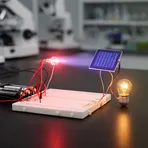
Relates to devices that change light into electricity or electricity into light
Surface Forms
Morphology
Etymology
Electrooptic combines electro- ('electric') and optic ('light' or 'seeing'), so it points to electricity affecting light. That's why electrooptic is used for the way light changes in a material when electricity is applied.