
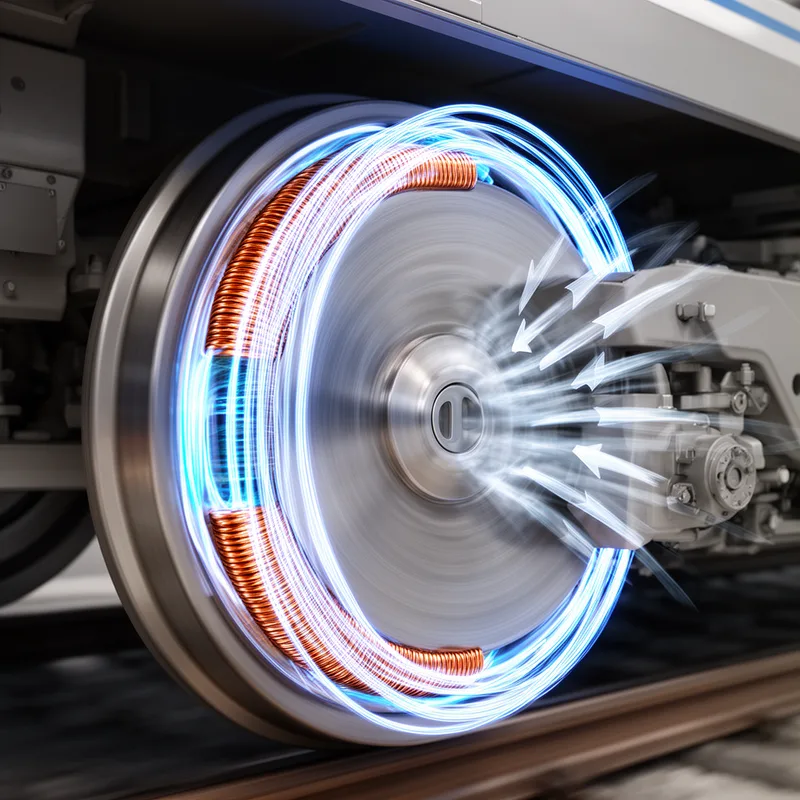
electrodynamic
 1
8.3
1
8.3

- adjective
- /ˌɛlɛktroʊdaɪˈnæmɪk/
- Specialized
- Researchers are studying the electrodynamic effects of moving charges in high-speed environments.
- electrodynamic effects
- quantum electrodynamic
Examples
-
Electrodynamic processes like e+e- pair creation and Compton scattering are sensitive to the photon polarization, but their analyzing power, as measured by the fractional asymmetry s, is only a few percent.
Academic text (2005) -
The engineer explained the electrodynamic forces that influence the behavior of electric motors.
-
First, quantum electrodynamic is a quantum field theory.
-
The e-Gamma-e vertex is purely electrodynamic and therefore calculable.
Academic text (1993) -
His research emphasizes integrated modeling of electrodynamic phenomena, fluid flow, heat and mass transfer with microstructural formation in materials processed on Earth and in space.
Academic text (2005) -
One can use the quantum electrodynamic theory of spontaneous emission to calculate the decay rate and frequency shift resulting from vacuum field fluctuations acting on an atom in free space.
Academic text (1994) -
A new generation of optical microresonators is making possible the exploration of quantum electrodynamic phenomena in condensed matter systems and providing microlasers with a wide range of potential applications.
Academic text (1994) -
But these electrodynamic forces decrease with increasing speeds—the opposite of normal frictional and aerodynamic drag.
Academic text (2002) -
After nearly 20 years of experimental research, Fritz-Albert Popp put forward the hypothesis that biophotons are emitted from a coherent electrodynamic field within the living system.
Blog text (1) -
To understand lightning, one must consider the electrodynamic interactions of charged particles in the atmosphere.
Synonyms
 103
6.3
103
6.3
Relating to electricity, magnets, and the waves they make
Surface Forms
Morphology
Etymology
Electrodynamic combines electro- and dynamic, where electro- is the same part you see in electric and dynamic means 'power' or 'force'. So it refers to the forces made by moving 'electricity', which is why we use it for brakes, motors, and microphones that work with electric currents.